Readings Newsletter
Become a Readings Member to make your shopping experience even easier.
Sign in or sign up for free!
You’re not far away from qualifying for FREE standard shipping within Australia
You’ve qualified for FREE standard shipping within Australia
The cart is loading…


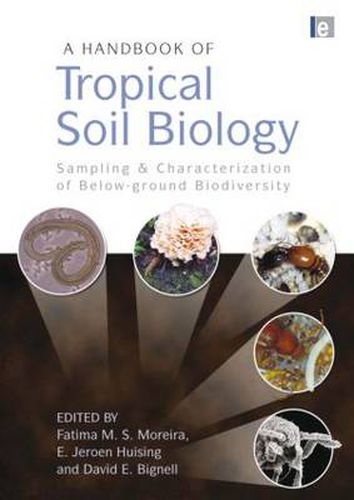
This practical handbook describes sampling and laboratory assessment methods for the biodiversity of a number of key functional groups of soil organisms, including insects, earthworms, nematodes, fungi and bacteria. The methods have been assembled and the protocols drafted by a number of scientists associated with the UNEP-GEF funded Conservation and Sustainable Management of Below-Ground Biodiversity Project, executed by the Tropical Soil Biology and Fertility (TSBF) Institute of the International Center for Tropical Agriculture (CIAT).
The methods provide a standardized basis for characterizing soil biodiversity and current land uses in terrestrial natural, semi-natural and agroecosystems in tropical forests and at forest margins. The aim is to assess soil biodiversity against current and historic land use practices both at plot and landscape scales and, further, to identify opportunities for improved sustainable land management through the introduction, management or remediation of soil biota, thus reducing the need for external inputs such as fertilizers and pesticides. The book also contains extensive advice on the handling of specimens and the allocation of organisms to strain or functional group type.
Published with TSBF-CIAT, CTA, UNEP and GEF
$9.00 standard shipping within Australia
FREE standard shipping within Australia for orders over $100.00
Express & International shipping calculated at checkout
Stock availability can be subject to change without notice. We recommend calling the shop or contacting our online team to check availability of low stock items. Please see our Shopping Online page for more details.
This practical handbook describes sampling and laboratory assessment methods for the biodiversity of a number of key functional groups of soil organisms, including insects, earthworms, nematodes, fungi and bacteria. The methods have been assembled and the protocols drafted by a number of scientists associated with the UNEP-GEF funded Conservation and Sustainable Management of Below-Ground Biodiversity Project, executed by the Tropical Soil Biology and Fertility (TSBF) Institute of the International Center for Tropical Agriculture (CIAT).
The methods provide a standardized basis for characterizing soil biodiversity and current land uses in terrestrial natural, semi-natural and agroecosystems in tropical forests and at forest margins. The aim is to assess soil biodiversity against current and historic land use practices both at plot and landscape scales and, further, to identify opportunities for improved sustainable land management through the introduction, management or remediation of soil biota, thus reducing the need for external inputs such as fertilizers and pesticides. The book also contains extensive advice on the handling of specimens and the allocation of organisms to strain or functional group type.
Published with TSBF-CIAT, CTA, UNEP and GEF
Search our extensive online catalogue.
