Readings Newsletter
Become a Readings Member to make your shopping experience even easier.
Sign in or sign up for free!
You’re not far away from qualifying for FREE standard shipping within Australia
You’ve qualified for FREE standard shipping within Australia
The cart is loading…


The observed concentrations of pharmaceuticals and personal care products (PPCPs) in raw wastewater confirm that municipal wastewater represents the main disposal pathway for the PPCPs consumed in households, hospitals and industry. In sewage treatment plant effluents most PPCPs are still present, since many of these polar and persistent compounds are being removed only partially or, in some cases, not at all. Treated wastewater therefore represents an important point source for PPCPs into the environment. After passing a sewage treatment plant the treated wastewater is mostly discharged into rivers and streams or sometimes used to irrigate fields. If drinking water is produced using resources containing a substantial proportion of treated wastewater (e.g. from river water downstream of communities) the water cycle is closed and indirect potable reuse occurs.
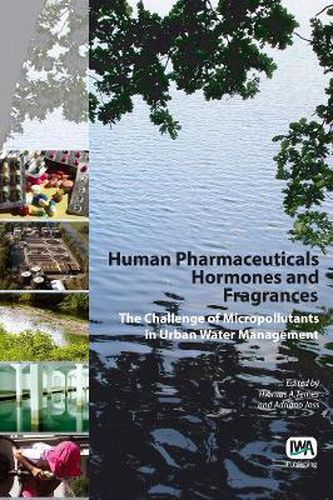
Human Pharmaceuticals, Hormones and Fragrances provides an overview of the occurrence, analytics, removal and environmental risk of pharmaceuticals and personal care products in wastewater, surface water and drinking water. The book covers all aspects of the fate and removal of PPCPs in the whole water cycle: consumption and occurrence, analytical methods, the legal background, environmental risk assessment, human and animal toxicology, source control options, wastewater and drinking water treatment as well as indirect reuse.
The book presents a summary of the results obtained during the EU project Poseidon , combined with further expert knowledge on the field, and is written at a level appropriate for professionals involved in management of water resource quality. Professionals in the field including decision makers, engineers and scientists, as well as students entering the field, will find this an invaluable source of information. First comprehensive study on the assessment, fate and removal of pharmaceuticals and personal care products in wastewater and drinking water treatment. Emphasises the importance of micropollutants in the water cycle, provides methods for quantifying their fate and technologies for their removal.
$9.00 standard shipping within Australia
FREE standard shipping within Australia for orders over $100.00
Express & International shipping calculated at checkout
Stock availability can be subject to change without notice. We recommend calling the shop or contacting our online team to check availability of low stock items. Please see our Shopping Online page for more details.
The observed concentrations of pharmaceuticals and personal care products (PPCPs) in raw wastewater confirm that municipal wastewater represents the main disposal pathway for the PPCPs consumed in households, hospitals and industry. In sewage treatment plant effluents most PPCPs are still present, since many of these polar and persistent compounds are being removed only partially or, in some cases, not at all. Treated wastewater therefore represents an important point source for PPCPs into the environment. After passing a sewage treatment plant the treated wastewater is mostly discharged into rivers and streams or sometimes used to irrigate fields. If drinking water is produced using resources containing a substantial proportion of treated wastewater (e.g. from river water downstream of communities) the water cycle is closed and indirect potable reuse occurs.
Human Pharmaceuticals, Hormones and Fragrances provides an overview of the occurrence, analytics, removal and environmental risk of pharmaceuticals and personal care products in wastewater, surface water and drinking water. The book covers all aspects of the fate and removal of PPCPs in the whole water cycle: consumption and occurrence, analytical methods, the legal background, environmental risk assessment, human and animal toxicology, source control options, wastewater and drinking water treatment as well as indirect reuse.
The book presents a summary of the results obtained during the EU project Poseidon , combined with further expert knowledge on the field, and is written at a level appropriate for professionals involved in management of water resource quality. Professionals in the field including decision makers, engineers and scientists, as well as students entering the field, will find this an invaluable source of information. First comprehensive study on the assessment, fate and removal of pharmaceuticals and personal care products in wastewater and drinking water treatment. Emphasises the importance of micropollutants in the water cycle, provides methods for quantifying their fate and technologies for their removal.
Search our extensive online catalogue.
