Readings Newsletter
Become a Readings Member to make your shopping experience even easier.
Sign in or sign up for free!
You’re not far away from qualifying for FREE standard shipping within Australia
You’ve qualified for FREE standard shipping within Australia
The cart is loading…


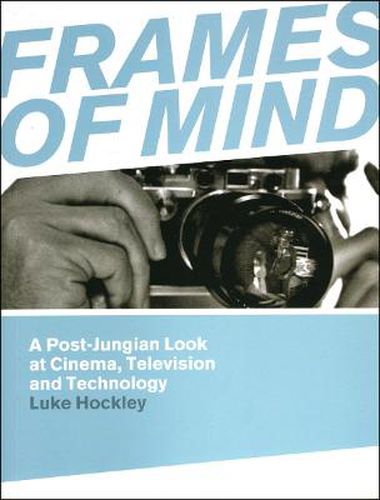
Luke Hockley’s Frames of Mind introduces post-Jungian analytic psychology and explores how its theories can be applied to television and film. Frames of Mind contextualises post-Jungian theory in the media criticism canon and then goes on to explain the role and uses of analytical psychology in film and television criticism.In this illuminating psychoanalysis of our media environment, Hockley probes questions such as why we have genuine emotional responses to film events we know to be fictional, why we are compulsively driven to watch television, and how advertisers use unconscious motifs to persuade viewers.It features novel readings of traditional media subjects and provides new ways of analysing familiar examples in film & television such as Chinatown and Star Trek . It will appeal to students, researchers, academics & practitioners interested in media and/or analytical psychology. It is suitable as both a textbook & supplementary reading.
$9.00 standard shipping within Australia
FREE standard shipping within Australia for orders over $100.00
Express & International shipping calculated at checkout
Stock availability can be subject to change without notice. We recommend calling the shop or contacting our online team to check availability of low stock items. Please see our Shopping Online page for more details.
Luke Hockley’s Frames of Mind introduces post-Jungian analytic psychology and explores how its theories can be applied to television and film. Frames of Mind contextualises post-Jungian theory in the media criticism canon and then goes on to explain the role and uses of analytical psychology in film and television criticism.In this illuminating psychoanalysis of our media environment, Hockley probes questions such as why we have genuine emotional responses to film events we know to be fictional, why we are compulsively driven to watch television, and how advertisers use unconscious motifs to persuade viewers.It features novel readings of traditional media subjects and provides new ways of analysing familiar examples in film & television such as Chinatown and Star Trek . It will appeal to students, researchers, academics & practitioners interested in media and/or analytical psychology. It is suitable as both a textbook & supplementary reading.
Search our extensive online catalogue.
