Readings Newsletter
Become a Readings Member to make your shopping experience even easier.
Sign in or sign up for free!
You’re not far away from qualifying for FREE standard shipping within Australia
You’ve qualified for FREE standard shipping within Australia
The cart is loading…


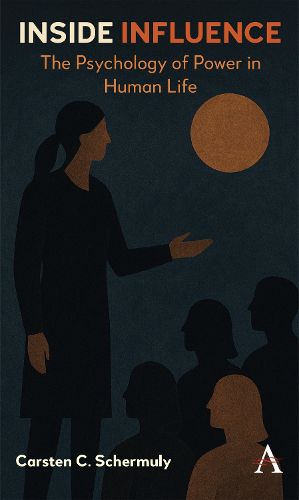
The book, Inside Influence: The Psychology of Power in Human Life, examines why people increasingly entrust significant power to a small number of leaders and how this power can profoundly influence those who hold it. While Authoritarian leadership is sometimes justified as a source of stability in uncertain times, psychological research shows that power can distort judgement, reduce empathy and encourage impulsive or unethical behaviour, often making it difficult to give up. Schermuly argues that the key is not to reject power but to understand its psychological mechanisms, from the personal resources that create influence to the biological and cognitive changes triggered by gaining or losing power. He explores why certain individuals rise to power, how power can corrupt decision-making and how organisations can mitigate these risks through distributed structures, better leader selection and psychological empowerment. Rather than teaching readers how to obtain power, the book reveals how power shapes us, offering a research-based foundation for using it more responsibly and for the common good.
$9.00 standard shipping within Australia
FREE standard shipping within Australia for orders over $100.00
Express & International shipping calculated at checkout
Stock availability can be subject to change without notice. We recommend calling the shop or contacting our online team to check availability of low stock items. Please see our Shopping Online page for more details.
The book, Inside Influence: The Psychology of Power in Human Life, examines why people increasingly entrust significant power to a small number of leaders and how this power can profoundly influence those who hold it. While Authoritarian leadership is sometimes justified as a source of stability in uncertain times, psychological research shows that power can distort judgement, reduce empathy and encourage impulsive or unethical behaviour, often making it difficult to give up. Schermuly argues that the key is not to reject power but to understand its psychological mechanisms, from the personal resources that create influence to the biological and cognitive changes triggered by gaining or losing power. He explores why certain individuals rise to power, how power can corrupt decision-making and how organisations can mitigate these risks through distributed structures, better leader selection and psychological empowerment. Rather than teaching readers how to obtain power, the book reveals how power shapes us, offering a research-based foundation for using it more responsibly and for the common good.
Search our extensive online catalogue.
