Readings Newsletter
Become a Readings Member to make your shopping experience even easier.
Sign in or sign up for free!
You’re not far away from qualifying for FREE standard shipping within Australia
You’ve qualified for FREE standard shipping within Australia
The cart is loading…


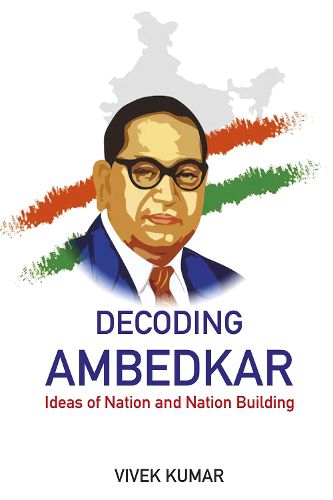
Revealing Dr. B.R. Ambedkar's enduring impact on sociology, social justice, and political thought.
The book sets out a discourse on Dr. B.R. Ambedkar's vast horizon of knowledge production. Through the essays in the book, the author has tried to deconstruct the reductionist approach adopted by mainstream academia, intelligentsia, and the Indian media to understand Ambedkar. It has recorded his erasures from various academic texts on sociology, history, literature, and creative fields like feature films. Juxtaposing this process of reductionism and erasure of Ambedkar, the book probes how he has been received and appreciated by international institutions and academicians; how, on the one hand, they have engaged with his writings on various aspects of society, polity, democracy, and social justice, and on the other, how they have hailed his academics in their writings. Further, the book maps the original and unique theoretical and philosophical insights provided by Babasaheb on Hindu social order with the place of an individual, varna, the genesis of caste, graded inequality, and the annihilation of caste, etc. Additionally, taking clues from the essential elements of social justice delineated by Plato and Rawls, this book has tried to search for the aspects of social justice in Ambedkar's thoughts. His refutations of thoughts of social scientists, such as Senart, Nesfield, and Risley, and recognition of thoughts of Ketkar, Jefferson, Durkheim, Weber, Marx, Tarde, Renan, and Acton, to name just a few, prove the point that Ambedkar should be regarded as one of the pioneers of Indian Sociology and treated at par with any national and international academics. In this sense, the book has underlined that Dalits are not engaged only in producing and analysing empirical data. Instead, they can evolve theoretical and conceptual propositions to deconstruct and reconstruct various social realities.
$9.00 standard shipping within Australia
FREE standard shipping within Australia for orders over $100.00
Express & International shipping calculated at checkout
Stock availability can be subject to change without notice. We recommend calling the shop or contacting our online team to check availability of low stock items. Please see our Shopping Online page for more details.
Revealing Dr. B.R. Ambedkar's enduring impact on sociology, social justice, and political thought.
The book sets out a discourse on Dr. B.R. Ambedkar's vast horizon of knowledge production. Through the essays in the book, the author has tried to deconstruct the reductionist approach adopted by mainstream academia, intelligentsia, and the Indian media to understand Ambedkar. It has recorded his erasures from various academic texts on sociology, history, literature, and creative fields like feature films. Juxtaposing this process of reductionism and erasure of Ambedkar, the book probes how he has been received and appreciated by international institutions and academicians; how, on the one hand, they have engaged with his writings on various aspects of society, polity, democracy, and social justice, and on the other, how they have hailed his academics in their writings. Further, the book maps the original and unique theoretical and philosophical insights provided by Babasaheb on Hindu social order with the place of an individual, varna, the genesis of caste, graded inequality, and the annihilation of caste, etc. Additionally, taking clues from the essential elements of social justice delineated by Plato and Rawls, this book has tried to search for the aspects of social justice in Ambedkar's thoughts. His refutations of thoughts of social scientists, such as Senart, Nesfield, and Risley, and recognition of thoughts of Ketkar, Jefferson, Durkheim, Weber, Marx, Tarde, Renan, and Acton, to name just a few, prove the point that Ambedkar should be regarded as one of the pioneers of Indian Sociology and treated at par with any national and international academics. In this sense, the book has underlined that Dalits are not engaged only in producing and analysing empirical data. Instead, they can evolve theoretical and conceptual propositions to deconstruct and reconstruct various social realities.
Search our extensive online catalogue.
