Readings Newsletter
Become a Readings Member to make your shopping experience even easier.
Sign in or sign up for free!
You’re not far away from qualifying for FREE standard shipping within Australia
You’ve qualified for FREE standard shipping within Australia
The cart is loading…


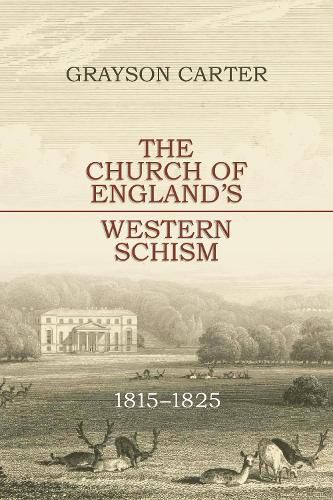
Examines one of the most significant events in the history of the late Georgian church, and revises accepted notions of Evangelical and Anglican ecclesiology and identity.
This study examines the establishment and progress of the Western Schism, which occurred between 1815 and c.1825-the first group secession from the Church of England since the Nonjurors during the late seventeenth century. As such, the Schism proved to be one of the most significant events in the history of the Church between the end of the Napoleonic Wars and the enactment of the 'Constitutional Revolution' of 1828-32. Despite the fears of many inside and outside the Church that the Schism would produce a wave of Evangelical secessions throughout England and Ireland, its influence was largely confined to London and the counties of Devon, Dorset, Gloucestershire, Hampshire, Somerset, Sussex and Wiltshire. Its leadership was comprised of a comparatively small group of clergy and laity drawn from prominent and influential commercial and clerical families (especially those from the Baring banking tribe) and bound by close ties of kinship, friendship and ideology. These factors, along with the Schism's heretical pronouncements and unusual ecclesial practices, its inclusion of women's ministry, and its secretive nature, generated considerable sensationalism and novelty value. The same factors also provoked a sustained period of criticism in which numerous leading religious figures, journals and newspapers participated. Surprisingly, while this criticism of the Schism emerged from every point on the religious compass, including High Churchmen, liberals and Nonconformists, it was the Evangelicals who quickly emerged as the Schism's principal critics. Evangelicals denounced not only the heretical nature of the Schism, but also its inclusion of women in leadership, its abandonment of the Established Church and its attempts to tarnish the reputation of the 'gospel party' by calling into question its adherence to apostolic fidelity and the Reformed heritage of the English Church.
This work, the first extensive examination of the Western Schism, revises accepted notions of Evangelical (and Anglican) ecclesiology and identity during the late Georgian period. It discloses how a prominent and small, but influential, group of clergy and laity, alarmed by the Church's failure to respond adequately to the disruptive social and spiritual events of the day, set out to establish a rival ecclesial body which, despite the investment of significant energy and financial resources, ultimately failed to coalesce into a viable and lasting alternative to the Established Church.
$9.00 standard shipping within Australia
FREE standard shipping within Australia for orders over $100.00
Express & International shipping calculated at checkout
Stock availability can be subject to change without notice. We recommend calling the shop or contacting our online team to check availability of low stock items. Please see our Shopping Online page for more details.
Examines one of the most significant events in the history of the late Georgian church, and revises accepted notions of Evangelical and Anglican ecclesiology and identity.
This study examines the establishment and progress of the Western Schism, which occurred between 1815 and c.1825-the first group secession from the Church of England since the Nonjurors during the late seventeenth century. As such, the Schism proved to be one of the most significant events in the history of the Church between the end of the Napoleonic Wars and the enactment of the 'Constitutional Revolution' of 1828-32. Despite the fears of many inside and outside the Church that the Schism would produce a wave of Evangelical secessions throughout England and Ireland, its influence was largely confined to London and the counties of Devon, Dorset, Gloucestershire, Hampshire, Somerset, Sussex and Wiltshire. Its leadership was comprised of a comparatively small group of clergy and laity drawn from prominent and influential commercial and clerical families (especially those from the Baring banking tribe) and bound by close ties of kinship, friendship and ideology. These factors, along with the Schism's heretical pronouncements and unusual ecclesial practices, its inclusion of women's ministry, and its secretive nature, generated considerable sensationalism and novelty value. The same factors also provoked a sustained period of criticism in which numerous leading religious figures, journals and newspapers participated. Surprisingly, while this criticism of the Schism emerged from every point on the religious compass, including High Churchmen, liberals and Nonconformists, it was the Evangelicals who quickly emerged as the Schism's principal critics. Evangelicals denounced not only the heretical nature of the Schism, but also its inclusion of women in leadership, its abandonment of the Established Church and its attempts to tarnish the reputation of the 'gospel party' by calling into question its adherence to apostolic fidelity and the Reformed heritage of the English Church.
This work, the first extensive examination of the Western Schism, revises accepted notions of Evangelical (and Anglican) ecclesiology and identity during the late Georgian period. It discloses how a prominent and small, but influential, group of clergy and laity, alarmed by the Church's failure to respond adequately to the disruptive social and spiritual events of the day, set out to establish a rival ecclesial body which, despite the investment of significant energy and financial resources, ultimately failed to coalesce into a viable and lasting alternative to the Established Church.
Search our extensive online catalogue.
