Readings Newsletter
Become a Readings Member to make your shopping experience even easier.
Sign in or sign up for free!
You’re not far away from qualifying for FREE standard shipping within Australia
You’ve qualified for FREE standard shipping within Australia
The cart is loading…


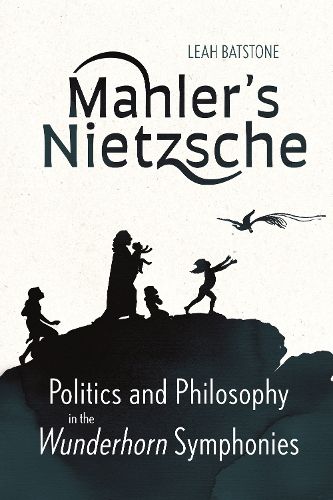
Gustav Mahler and Friedrich Nietzsche both exercised a tremendous influence over the twentieth century. All the more fascinating, then, is Mahler’s intellectual engagement with the writings of Nietzsche.
Given the limited and frequently cryptic nature of the composer’s own comments on Nietzsche, Mahler’s specific understanding of the elusive thinker is achieved through the examination of Nietzsche’s reception amongst the people who introduced composer to philosopher: members of the Pernerstorfer Circle at the University of Vienna.
Mahler’s Nietzsche draws on a variety of primary sources to answer two key questions. The first is hermeneutic: what do Mahler’s allusions to Nietzsche mean? The second is creative: how can Mahler’s own characterization of Nietzsche as an epoch-making influence be identified in his compositional techniques? By answering these two questions, the book paints a more accurate picture of the intersections of the arts, philosophy and politics in fin-de-siecle Vienna. Mahler’s Nietzsche will be required reading for scholars and students of nineteenth and early twentieth century German music and philosophy.
$9.00 standard shipping within Australia
FREE standard shipping within Australia for orders over $100.00
Express & International shipping calculated at checkout
Stock availability can be subject to change without notice. We recommend calling the shop or contacting our online team to check availability of low stock items. Please see our Shopping Online page for more details.
Gustav Mahler and Friedrich Nietzsche both exercised a tremendous influence over the twentieth century. All the more fascinating, then, is Mahler’s intellectual engagement with the writings of Nietzsche.
Given the limited and frequently cryptic nature of the composer’s own comments on Nietzsche, Mahler’s specific understanding of the elusive thinker is achieved through the examination of Nietzsche’s reception amongst the people who introduced composer to philosopher: members of the Pernerstorfer Circle at the University of Vienna.
Mahler’s Nietzsche draws on a variety of primary sources to answer two key questions. The first is hermeneutic: what do Mahler’s allusions to Nietzsche mean? The second is creative: how can Mahler’s own characterization of Nietzsche as an epoch-making influence be identified in his compositional techniques? By answering these two questions, the book paints a more accurate picture of the intersections of the arts, philosophy and politics in fin-de-siecle Vienna. Mahler’s Nietzsche will be required reading for scholars and students of nineteenth and early twentieth century German music and philosophy.
Search our extensive online catalogue.
