Readings Newsletter
Become a Readings Member to make your shopping experience even easier.
Sign in or sign up for free!
You’re not far away from qualifying for FREE standard shipping within Australia
You’ve qualified for FREE standard shipping within Australia
The cart is loading…


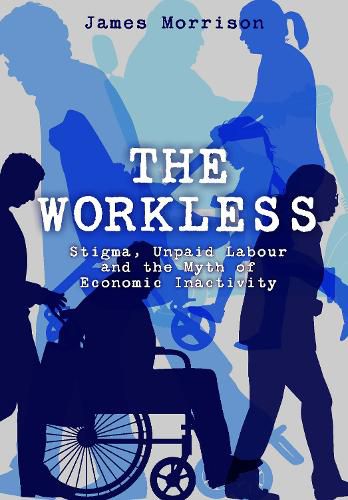
This book critically analyses historical and contemporary discourses around worklessness, economic inactivity and the factors that contribute to people withdrawing from the conventional labour market.
In analysing popular portrayals of 'the workless', the book draws heavily on the sociological theories of stigma and symbolic annihilation, and conceives of the contemporary narrative about the UK's 'crisis' in economic inactivity as the latest in a continuum of periodic moral panics about worklessness. A key argument is that neoliberal definitions of 'work' and 'worklessness' are too narrow, and deny - and render invisible - the importance of various forms of unpaid labour performed by many people classified as 'inactive', notably informal caregiving and volunteering.
Methodologically, it combines analysis of historical and contemporary media and political narratives around 'worklessness' and factors that limit individuals' capacity for conventional paid work - from disability and long-term illness to caring responsibilities - with interviews with people who have lived experience of 'economic inactivity'. The scope of analysis encompasses critical discourse analysis of print and online newspaper articles from across the UK national and regional press; 'below-the-line' comments posted by audience-members beneath articles; and verbatim records of debates and speeches focusing on economic inactivity in the UK Parliament. Semi-structured interviews were conducted with 14 individuals classified as economically inactive. These were subjected to thematic analysis.
Contrasting popular narratives with the lived experiences of 'inactive' people, it questions the validity of dominant stereotypes and the wider efficacy of policies designed to address 'worklessness'
$9.00 standard shipping within Australia
FREE standard shipping within Australia for orders over $100.00
Express & International shipping calculated at checkout
Stock availability can be subject to change without notice. We recommend calling the shop or contacting our online team to check availability of low stock items. Please see our Shopping Online page for more details.
This book critically analyses historical and contemporary discourses around worklessness, economic inactivity and the factors that contribute to people withdrawing from the conventional labour market.
In analysing popular portrayals of 'the workless', the book draws heavily on the sociological theories of stigma and symbolic annihilation, and conceives of the contemporary narrative about the UK's 'crisis' in economic inactivity as the latest in a continuum of periodic moral panics about worklessness. A key argument is that neoliberal definitions of 'work' and 'worklessness' are too narrow, and deny - and render invisible - the importance of various forms of unpaid labour performed by many people classified as 'inactive', notably informal caregiving and volunteering.
Methodologically, it combines analysis of historical and contemporary media and political narratives around 'worklessness' and factors that limit individuals' capacity for conventional paid work - from disability and long-term illness to caring responsibilities - with interviews with people who have lived experience of 'economic inactivity'. The scope of analysis encompasses critical discourse analysis of print and online newspaper articles from across the UK national and regional press; 'below-the-line' comments posted by audience-members beneath articles; and verbatim records of debates and speeches focusing on economic inactivity in the UK Parliament. Semi-structured interviews were conducted with 14 individuals classified as economically inactive. These were subjected to thematic analysis.
Contrasting popular narratives with the lived experiences of 'inactive' people, it questions the validity of dominant stereotypes and the wider efficacy of policies designed to address 'worklessness'
Search our extensive online catalogue.
