Readings Newsletter
Become a Readings Member to make your shopping experience even easier.
Sign in or sign up for free!
You’re not far away from qualifying for FREE standard shipping within Australia
You’ve qualified for FREE standard shipping within Australia
The cart is loading…


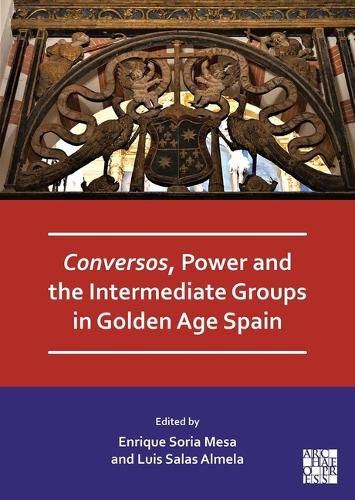
Recent studies have revealed the existence of great social mobility in Spain in the 16th and 17th centuries, contrary to the previous historiographical consensus. The archival research carried out by various specialists - and above all by Dr. Enrique Soria Mesa and his team - has been decisive in this discovery. Indeed, over the last two decades, the existence of a system based on significant mobility has been established as a new historiographical paradigm. This newly discovered system, however, preserved the appearance of eternity and statism that the prevailing ideological order required to perpetuate itself.
Nevertheless, not all this social progression was aimed directly towards the achievement of integration into the nobility. Quite often, under the veil of aristocratic or noble appearances, impressive artisanal and mercantile activities were developed over extensive periods. These activities were in fact closely related to the economic boost that for more than a century converted a large part of Spain - including Andalusia - into a first-rate economic power.
This book aims to rescue the history of a powerful intermediate category - formerly referred to as the bourgeoisie - that the contributors have been detecting in their research in national and local archives for more than twenty years. Based on that evidence, they suggest using the term mesocracy, since all these groups occupied intermediate spaces of power while they slowly tried to move upwards in the social ladder, a movement developed by resorting to long-term family strategies that created dynasties of officials that ranged from middle municipal positions (jurados or jurors) to public notaries, also including merchants, artisans, doctors, and lawyers.
In addition, in all these groups a very significant presence of Jewish converts - conversos - was noted, and it was these roles that the descendants of Jews found settled professional status, thus achieving not only socioeconomic success but also definitive assimilation, despite the repressive effects of the Inquisition and the racist blood purity statutes. Therefore, the overarching chronology, before and after the time under our scrutiny, suggests a fall in the 15th century from prominent power and status in many cities of Castile for the majority of Jews and conversos, followed by a slow recovery in the 16th and 17th centuries using a variety of means (such as minor institutional positions, like jurors in the city councils; professional associations - merchant guilds, for instance; or some noteworthy professions - doctors, notaries or prominent servants of the aristocracy), ending in a period of obscurity and oblivion in the 18th century. The book focuses on the Early Modern period, when for many conversos these mesocratic stages seem to have formed an acceptable, though discrete, solution. Nothing, however, should be taken for granted, and where possible the contributions survey the importance of the converso condition within the groups under study.
All seven contributions are based on a great variety of primary sources and together substantiate the book's claims with a considerable weight of documentary evidence.
$9.00 standard shipping within Australia
FREE standard shipping within Australia for orders over $100.00
Express & International shipping calculated at checkout
Stock availability can be subject to change without notice. We recommend calling the shop or contacting our online team to check availability of low stock items. Please see our Shopping Online page for more details.
Recent studies have revealed the existence of great social mobility in Spain in the 16th and 17th centuries, contrary to the previous historiographical consensus. The archival research carried out by various specialists - and above all by Dr. Enrique Soria Mesa and his team - has been decisive in this discovery. Indeed, over the last two decades, the existence of a system based on significant mobility has been established as a new historiographical paradigm. This newly discovered system, however, preserved the appearance of eternity and statism that the prevailing ideological order required to perpetuate itself.
Nevertheless, not all this social progression was aimed directly towards the achievement of integration into the nobility. Quite often, under the veil of aristocratic or noble appearances, impressive artisanal and mercantile activities were developed over extensive periods. These activities were in fact closely related to the economic boost that for more than a century converted a large part of Spain - including Andalusia - into a first-rate economic power.
This book aims to rescue the history of a powerful intermediate category - formerly referred to as the bourgeoisie - that the contributors have been detecting in their research in national and local archives for more than twenty years. Based on that evidence, they suggest using the term mesocracy, since all these groups occupied intermediate spaces of power while they slowly tried to move upwards in the social ladder, a movement developed by resorting to long-term family strategies that created dynasties of officials that ranged from middle municipal positions (jurados or jurors) to public notaries, also including merchants, artisans, doctors, and lawyers.
In addition, in all these groups a very significant presence of Jewish converts - conversos - was noted, and it was these roles that the descendants of Jews found settled professional status, thus achieving not only socioeconomic success but also definitive assimilation, despite the repressive effects of the Inquisition and the racist blood purity statutes. Therefore, the overarching chronology, before and after the time under our scrutiny, suggests a fall in the 15th century from prominent power and status in many cities of Castile for the majority of Jews and conversos, followed by a slow recovery in the 16th and 17th centuries using a variety of means (such as minor institutional positions, like jurors in the city councils; professional associations - merchant guilds, for instance; or some noteworthy professions - doctors, notaries or prominent servants of the aristocracy), ending in a period of obscurity and oblivion in the 18th century. The book focuses on the Early Modern period, when for many conversos these mesocratic stages seem to have formed an acceptable, though discrete, solution. Nothing, however, should be taken for granted, and where possible the contributions survey the importance of the converso condition within the groups under study.
All seven contributions are based on a great variety of primary sources and together substantiate the book's claims with a considerable weight of documentary evidence.
Search our extensive online catalogue.
