Readings Newsletter
Become a Readings Member to make your shopping experience even easier.
Sign in or sign up for free!
You’re not far away from qualifying for FREE standard shipping within Australia
You’ve qualified for FREE standard shipping within Australia
The cart is loading…


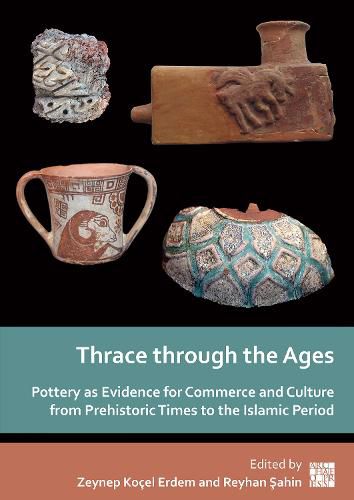
Thrace through the Ages draws attention to the importance of pottery evidence in evaluating archaeological material from Thrace. The volume considers the informative value of pottery in tracing cultural and political phases, by providing us with important data about production centres, commercial relations, daily life, religious rituals and burial customs.
The first chapter examines ceramic research in Thrace from past to present. The second chapter is devoted to the interpretation of the data presented by ceramics regarding interregional commercial relations and cultural interaction. In the third chapter, ceramics are evaluated from the perspective of cult rituals. The fourth chapter includes the excavation and survey ceramics. The fifth chapter is classified according to the ceramic ware. In the last two chapters of the volume, various data presented by ceramics were evaluated by considering their qualitative and quantitative characteristics.
$9.00 standard shipping within Australia
FREE standard shipping within Australia for orders over $100.00
Express & International shipping calculated at checkout
Stock availability can be subject to change without notice. We recommend calling the shop or contacting our online team to check availability of low stock items. Please see our Shopping Online page for more details.
Thrace through the Ages draws attention to the importance of pottery evidence in evaluating archaeological material from Thrace. The volume considers the informative value of pottery in tracing cultural and political phases, by providing us with important data about production centres, commercial relations, daily life, religious rituals and burial customs.
The first chapter examines ceramic research in Thrace from past to present. The second chapter is devoted to the interpretation of the data presented by ceramics regarding interregional commercial relations and cultural interaction. In the third chapter, ceramics are evaluated from the perspective of cult rituals. The fourth chapter includes the excavation and survey ceramics. The fifth chapter is classified according to the ceramic ware. In the last two chapters of the volume, various data presented by ceramics were evaluated by considering their qualitative and quantitative characteristics.
Search our extensive online catalogue.
