Readings Newsletter
Become a Readings Member to make your shopping experience even easier.
Sign in or sign up for free!
You’re not far away from qualifying for FREE standard shipping within Australia
You’ve qualified for FREE standard shipping within Australia
The cart is loading…


This title is printed to order. This book may have been self-published. If so, we cannot guarantee the quality of the content. In the main most books will have gone through the editing process however some may not. We therefore suggest that you be aware of this before ordering this book. If in doubt check either the author or publisher’s details as we are unable to accept any returns unless they are faulty. Please contact us if you have any questions.
Through 2020-2021 school year students realized they had to become more autonomous, parents had to become more present, and teachers assumed new roles in the virtual teaching-learning experience induced by the global lockdown. Although this last school year was deeply marked by innovation at all levels, most of the changes were not planned or structured, thus becoming a difficult experience for all the educational stakeholders. Digital transformation carries unimagined possibilities, more interaction, flexibility and autonomy, the possibility for collaborative learning, developing critical thinking, resilience, and, above all, the will to change.
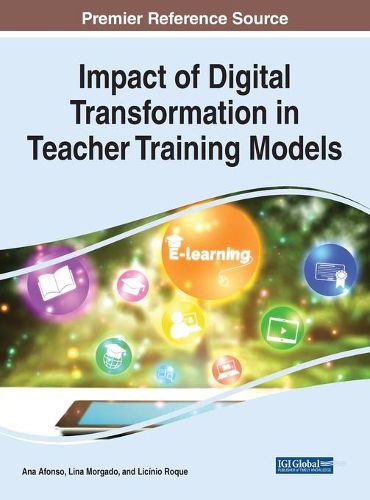
This book deepens this discussion of digital transformation in the educational culture and is centered at the intersection of educational technology, information systems, learning sciences, educational psychology and socio-cultural theories. The chapters in this book not only share best practices on innovative technology-based learning strategies, models, and tools, but the authors in the book are also committed to launch a reflective dialogue upon how digital transformation induces the creation of (re)new(ed) educational cultures towards a paradigm shift in the educational context. Providing an overview of research centering on the use of emerging technologies in educational contexts, and dissecting the challenges that digital transformation brings to educational technology, educational practices, teacher training models, students competence and parental roles, among others, this book aims to engage researchers, scholars and practitioners in critical reflection that will deepen the discussion about the potential paradigm shift induced by digital transformation in education.
$9.00 standard shipping within Australia
FREE standard shipping within Australia for orders over $100.00
Express & International shipping calculated at checkout
Stock availability can be subject to change without notice. We recommend calling the shop or contacting our online team to check availability of low stock items. Please see our Shopping Online page for more details.
This title is printed to order. This book may have been self-published. If so, we cannot guarantee the quality of the content. In the main most books will have gone through the editing process however some may not. We therefore suggest that you be aware of this before ordering this book. If in doubt check either the author or publisher’s details as we are unable to accept any returns unless they are faulty. Please contact us if you have any questions.
Through 2020-2021 school year students realized they had to become more autonomous, parents had to become more present, and teachers assumed new roles in the virtual teaching-learning experience induced by the global lockdown. Although this last school year was deeply marked by innovation at all levels, most of the changes were not planned or structured, thus becoming a difficult experience for all the educational stakeholders. Digital transformation carries unimagined possibilities, more interaction, flexibility and autonomy, the possibility for collaborative learning, developing critical thinking, resilience, and, above all, the will to change.
This book deepens this discussion of digital transformation in the educational culture and is centered at the intersection of educational technology, information systems, learning sciences, educational psychology and socio-cultural theories. The chapters in this book not only share best practices on innovative technology-based learning strategies, models, and tools, but the authors in the book are also committed to launch a reflective dialogue upon how digital transformation induces the creation of (re)new(ed) educational cultures towards a paradigm shift in the educational context. Providing an overview of research centering on the use of emerging technologies in educational contexts, and dissecting the challenges that digital transformation brings to educational technology, educational practices, teacher training models, students competence and parental roles, among others, this book aims to engage researchers, scholars and practitioners in critical reflection that will deepen the discussion about the potential paradigm shift induced by digital transformation in education.
Search our extensive online catalogue.
