Readings Newsletter
Become a Readings Member to make your shopping experience even easier.
Sign in or sign up for free!
You’re not far away from qualifying for FREE standard shipping within Australia
You’ve qualified for FREE standard shipping within Australia
The cart is loading…


This title is printed to order. This book may have been self-published. If so, we cannot guarantee the quality of the content. In the main most books will have gone through the editing process however some may not. We therefore suggest that you be aware of this before ordering this book. If in doubt check either the author or publisher’s details as we are unable to accept any returns unless they are faulty. Please contact us if you have any questions.
While online learning was an existing practice, the COVID-19 pandemic greatly accelerated its capabilities and forced educational organizations to swiftly introduce online learning for all units. Though schools will not always be faced with forced online learning, it is apparent that there are clear advantages and disadvantages to this teaching method, with its usage in the future cemented. As such, it is imperative that methods for measuring and assessing the effectiveness of online and blended learning are examined in order to improve outcomes and future practices.
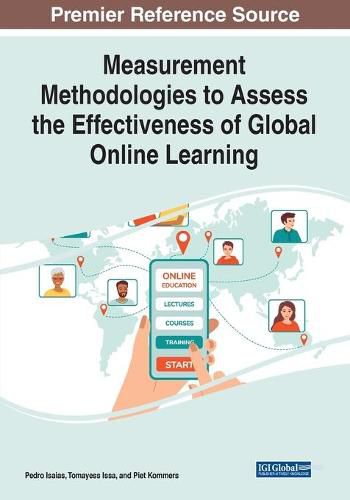
Measurement Methodologies to Assess the Effectiveness of Global Online Learning aims to assess the effectiveness of online teaching and learning in normal and pandemic situations by addressing challenges and opportunities of adoption of online platforms as well as effective learning strategies, investigating the best pedagogical practices in digital learning, questioning how to improve student motivation and performance, and managing and measuring academic workloads online. Covering a wide range of topics such as the future of education and digital literacy, it is ideal for teachers, instructional designers, curriculum developers, educational software developers, academics, researchers, and students.
$9.00 standard shipping within Australia
FREE standard shipping within Australia for orders over $100.00
Express & International shipping calculated at checkout
Stock availability can be subject to change without notice. We recommend calling the shop or contacting our online team to check availability of low stock items. Please see our Shopping Online page for more details.
This title is printed to order. This book may have been self-published. If so, we cannot guarantee the quality of the content. In the main most books will have gone through the editing process however some may not. We therefore suggest that you be aware of this before ordering this book. If in doubt check either the author or publisher’s details as we are unable to accept any returns unless they are faulty. Please contact us if you have any questions.
While online learning was an existing practice, the COVID-19 pandemic greatly accelerated its capabilities and forced educational organizations to swiftly introduce online learning for all units. Though schools will not always be faced with forced online learning, it is apparent that there are clear advantages and disadvantages to this teaching method, with its usage in the future cemented. As such, it is imperative that methods for measuring and assessing the effectiveness of online and blended learning are examined in order to improve outcomes and future practices.
Measurement Methodologies to Assess the Effectiveness of Global Online Learning aims to assess the effectiveness of online teaching and learning in normal and pandemic situations by addressing challenges and opportunities of adoption of online platforms as well as effective learning strategies, investigating the best pedagogical practices in digital learning, questioning how to improve student motivation and performance, and managing and measuring academic workloads online. Covering a wide range of topics such as the future of education and digital literacy, it is ideal for teachers, instructional designers, curriculum developers, educational software developers, academics, researchers, and students.
Search our extensive online catalogue.
