Readings Newsletter
Become a Readings Member to make your shopping experience even easier.
Sign in or sign up for free!
You’re not far away from qualifying for FREE standard shipping within Australia
You’ve qualified for FREE standard shipping within Australia
The cart is loading…


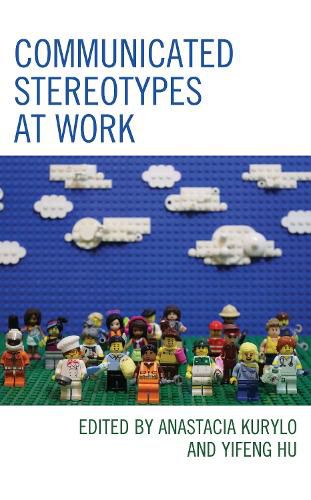
In Communicated Stereotypes at Work, the editors and contributors posit that stereotypes communicated in the workplace remain a pervasive issue due to the dichotomy between the discriminatory and functional roles that these stereotypes can play in a range of professional settings. Contributors demonstrate that while the use of stereotypes in the workplace is distasteful and exclusionary, communicating these stereotypes can also appear-on the surface-to provide a pathway toward bonding with others, giving advice, and reducing uncertainty. The result of this dichotomy is that those who communicate stereotypes in the workplace may not view this communication from themselves or others as being problematic. With an emphasis on qualitative methods and analyses, contributors deconstruct stereotypes by exploring the theoretical, empirical, and pragmatic roles they play in communication. In doing so, authors expose the underpinnings of stereotypes and why they are communicated, focus on the role all of us play in perpetuating stereotypes, and suggest alternative modes of productive discourse. Scholars of interpersonal and organizational communication, cultural studies, and sociology as well as practitioners of various professions will find this book particularly useful.
$9.00 standard shipping within Australia
FREE standard shipping within Australia for orders over $100.00
Express & International shipping calculated at checkout
Stock availability can be subject to change without notice. We recommend calling the shop or contacting our online team to check availability of low stock items. Please see our Shopping Online page for more details.
In Communicated Stereotypes at Work, the editors and contributors posit that stereotypes communicated in the workplace remain a pervasive issue due to the dichotomy between the discriminatory and functional roles that these stereotypes can play in a range of professional settings. Contributors demonstrate that while the use of stereotypes in the workplace is distasteful and exclusionary, communicating these stereotypes can also appear-on the surface-to provide a pathway toward bonding with others, giving advice, and reducing uncertainty. The result of this dichotomy is that those who communicate stereotypes in the workplace may not view this communication from themselves or others as being problematic. With an emphasis on qualitative methods and analyses, contributors deconstruct stereotypes by exploring the theoretical, empirical, and pragmatic roles they play in communication. In doing so, authors expose the underpinnings of stereotypes and why they are communicated, focus on the role all of us play in perpetuating stereotypes, and suggest alternative modes of productive discourse. Scholars of interpersonal and organizational communication, cultural studies, and sociology as well as practitioners of various professions will find this book particularly useful.
Search our extensive online catalogue.
