Readings Newsletter
Become a Readings Member to make your shopping experience even easier.
Sign in or sign up for free!
You’re not far away from qualifying for FREE standard shipping within Australia
You’ve qualified for FREE standard shipping within Australia
The cart is loading…


This title is printed to order. This book may have been self-published. If so, we cannot guarantee the quality of the content. In the main most books will have gone through the editing process however some may not. We therefore suggest that you be aware of this before ordering this book. If in doubt check either the author or publisher’s details as we are unable to accept any returns unless they are faulty. Please contact us if you have any questions.
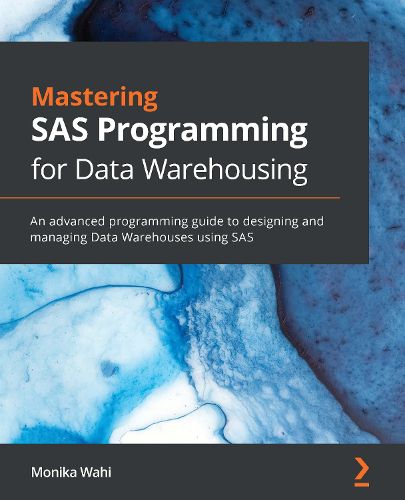
Build a strong foundation in SAS data warehousing by understanding data transformation code and policy, data stewardship and management, interconnectivity between SAS and other warehousing products, and print and web reporting
Key Features
Understand how to use SAS macros for standardizing extract, transform, and load (ETL) protocols Develop and use data curation files for effective warehouse management Learn how to develop and manage ETL, policies, and print and web reports that meet user needs
Book DescriptionSAS is used for various functions in the development and maintenance of data warehouses, thanks to its reputation of being able to handle ‘big data’.
This book will help you learn the pros and cons of storing data in SAS. As you progress, you’ll understand how to document and design extract-transform-load (ETL) protocols for SAS processes. Later, you’ll focus on how the use of SAS arrays and macros can help standardize ETL. The book will also help you examine approaches for serving up data using SAS and explore how connecting SAS to other systems can enhance the data warehouse user’s experience.
By the end of this data management book, you will have a fundamental understanding of the roles SAS can play in a warehouse environment, and be able to choose wisely when designing your data warehousing processes involving SAS.
What you will learn
Develop efficient ways to manage data input/output (I/O) in SAS Create and manage extract, transform, and load (ETL) code in SAS Standardize ETL through macro variables, macros, and arrays Identify data warehouse users and ensure their needs are met Design crosswalk and other variables to serve analyst needs Maintain data curation files to improve communication and management Use the output delivery system (ODS) for print and web reporting Connect other products to SAS to optimize storage and reporting
Who this book is forThis book is for data architects, managers leading data projects, and programmers or developers using SAS who want to effectively maintain a data lake, data mart, or data warehouse.
$9.00 standard shipping within Australia
FREE standard shipping within Australia for orders over $100.00
Express & International shipping calculated at checkout
Stock availability can be subject to change without notice. We recommend calling the shop or contacting our online team to check availability of low stock items. Please see our Shopping Online page for more details.
This title is printed to order. This book may have been self-published. If so, we cannot guarantee the quality of the content. In the main most books will have gone through the editing process however some may not. We therefore suggest that you be aware of this before ordering this book. If in doubt check either the author or publisher’s details as we are unable to accept any returns unless they are faulty. Please contact us if you have any questions.
Build a strong foundation in SAS data warehousing by understanding data transformation code and policy, data stewardship and management, interconnectivity between SAS and other warehousing products, and print and web reporting
Key Features
Understand how to use SAS macros for standardizing extract, transform, and load (ETL) protocols Develop and use data curation files for effective warehouse management Learn how to develop and manage ETL, policies, and print and web reports that meet user needs
Book DescriptionSAS is used for various functions in the development and maintenance of data warehouses, thanks to its reputation of being able to handle ‘big data’.
This book will help you learn the pros and cons of storing data in SAS. As you progress, you’ll understand how to document and design extract-transform-load (ETL) protocols for SAS processes. Later, you’ll focus on how the use of SAS arrays and macros can help standardize ETL. The book will also help you examine approaches for serving up data using SAS and explore how connecting SAS to other systems can enhance the data warehouse user’s experience.
By the end of this data management book, you will have a fundamental understanding of the roles SAS can play in a warehouse environment, and be able to choose wisely when designing your data warehousing processes involving SAS.
What you will learn
Develop efficient ways to manage data input/output (I/O) in SAS Create and manage extract, transform, and load (ETL) code in SAS Standardize ETL through macro variables, macros, and arrays Identify data warehouse users and ensure their needs are met Design crosswalk and other variables to serve analyst needs Maintain data curation files to improve communication and management Use the output delivery system (ODS) for print and web reporting Connect other products to SAS to optimize storage and reporting
Who this book is forThis book is for data architects, managers leading data projects, and programmers or developers using SAS who want to effectively maintain a data lake, data mart, or data warehouse.
Search our extensive online catalogue.
