Readings Newsletter
Become a Readings Member to make your shopping experience even easier.
Sign in or sign up for free!
You’re not far away from qualifying for FREE standard shipping within Australia
You’ve qualified for FREE standard shipping within Australia
The cart is loading…


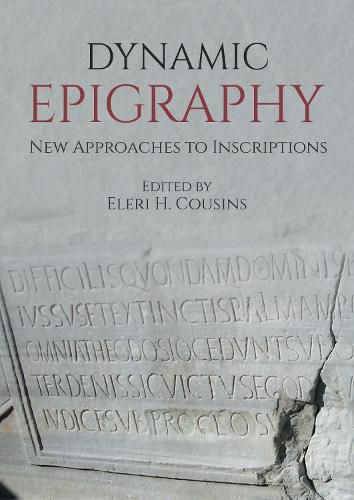
This volume, with origins in a panel at the 2018 Celtic Conference in Classics, presents creative new approaches to epigraphic material, in an attempt to ‘shake up’ how we deal with inscriptions. Broad themes include the embodied experience of epigraphy, the unique capacities of epigraphic language as a genre, the visuality of inscriptions and the interplay of inscriptions with literary texts. Although each chapter focuses on specific objects and epigraphic landscapes, ranging from Republican Rome to early modern Scotland, the emphasis here is on using these case studies not as an end in themselves, but as a means of exploring broader methodological and theoretical issues to do with how we use inscriptions as evidence, both for the Greco-Roman world and for other time periods. Drawing on conversations from fields such as archaeology and anthropology, philology, art history, linguistics and history, contributors also seek to push the boundaries of epigraphy as a discipline and to demonstrate the analytical fruits of interdisciplinary approaches to inscribed material. Methodologies such as phenomenology, translingualism, intertextuality and critical fabulation are deployed to offer new perspectives on the social functions of inscriptions as texts and objects and to open up new horizons for the use of inscriptions as evidence for past societies.
AUTHOR: Eleri H. Cousins is Lecturer in Roman History at Lancaster University. Her research focuses on the material culture of the western Roman Empire and the role of religion in provincial Roman society.
$9.00 standard shipping within Australia
FREE standard shipping within Australia for orders over $100.00
Express & International shipping calculated at checkout
Stock availability can be subject to change without notice. We recommend calling the shop or contacting our online team to check availability of low stock items. Please see our Shopping Online page for more details.
This volume, with origins in a panel at the 2018 Celtic Conference in Classics, presents creative new approaches to epigraphic material, in an attempt to ‘shake up’ how we deal with inscriptions. Broad themes include the embodied experience of epigraphy, the unique capacities of epigraphic language as a genre, the visuality of inscriptions and the interplay of inscriptions with literary texts. Although each chapter focuses on specific objects and epigraphic landscapes, ranging from Republican Rome to early modern Scotland, the emphasis here is on using these case studies not as an end in themselves, but as a means of exploring broader methodological and theoretical issues to do with how we use inscriptions as evidence, both for the Greco-Roman world and for other time periods. Drawing on conversations from fields such as archaeology and anthropology, philology, art history, linguistics and history, contributors also seek to push the boundaries of epigraphy as a discipline and to demonstrate the analytical fruits of interdisciplinary approaches to inscribed material. Methodologies such as phenomenology, translingualism, intertextuality and critical fabulation are deployed to offer new perspectives on the social functions of inscriptions as texts and objects and to open up new horizons for the use of inscriptions as evidence for past societies.
AUTHOR: Eleri H. Cousins is Lecturer in Roman History at Lancaster University. Her research focuses on the material culture of the western Roman Empire and the role of religion in provincial Roman society.
Search our extensive online catalogue.
