Readings Newsletter
Become a Readings Member to make your shopping experience even easier.
Sign in or sign up for free!
You’re not far away from qualifying for FREE standard shipping within Australia
You’ve qualified for FREE standard shipping within Australia
The cart is loading…


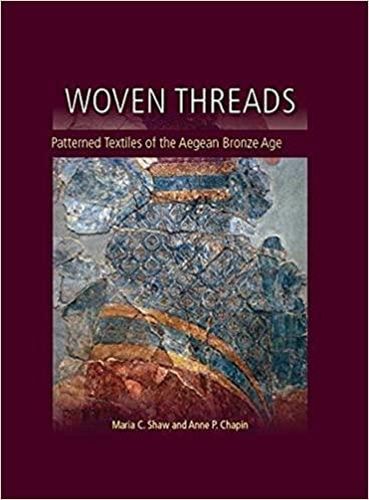
Woven textiles are produced by nearly all human societies. This volume investigates evidence for patterned textiles (that is, textiles woven with elaborate designs) that were produced by two early Mediterranean civilisations: the Minoans of Crete and the Mycenaeans of mainland Greece, that prospered during the Aegean Bronze Age, c. 3000-1200 BC, contemporary with pharaonic Egypt. Both could boast of specialists in textile production. Together with their wine, oil, and art, Minoan and Mycenaean textiles were much desired as trade goods. Artistic images of their fabrics preserved both in the Aegean and in other parts of the Mediterranean show elaborate patterns woven with rich decorative detail and colour. Only a few small scraps of textiles survive but evidence for their production is abundant and frescoes supply detailed information about a wide variety of now-lost textile goods from luxurious costumes and beautifully patterned wall hangings and carpets, to more utilitarian decorated fabrics. A review of surviving artistic and archaeological evidence indicates that textiles played essential practical and social roles in both Minoan and Mycenaean societies. AUTHOR: Maria Shaw was formerly Professor at the University of Toronto where she taught for more than 30 years until retirement. She specialises in many aspects of Minoan Crete and Greek archaeology in the Aegean area, is a leading expert on Minoan and Mycenaean wall painting and has intesets raging from Aegean-Egyptian interconnections to representations of natural landscapes in Aegean frescoes to the reconstruction of civic life in Crete.
$9.00 standard shipping within Australia
FREE standard shipping within Australia for orders over $100.00
Express & International shipping calculated at checkout
Stock availability can be subject to change without notice. We recommend calling the shop or contacting our online team to check availability of low stock items. Please see our Shopping Online page for more details.
Woven textiles are produced by nearly all human societies. This volume investigates evidence for patterned textiles (that is, textiles woven with elaborate designs) that were produced by two early Mediterranean civilisations: the Minoans of Crete and the Mycenaeans of mainland Greece, that prospered during the Aegean Bronze Age, c. 3000-1200 BC, contemporary with pharaonic Egypt. Both could boast of specialists in textile production. Together with their wine, oil, and art, Minoan and Mycenaean textiles were much desired as trade goods. Artistic images of their fabrics preserved both in the Aegean and in other parts of the Mediterranean show elaborate patterns woven with rich decorative detail and colour. Only a few small scraps of textiles survive but evidence for their production is abundant and frescoes supply detailed information about a wide variety of now-lost textile goods from luxurious costumes and beautifully patterned wall hangings and carpets, to more utilitarian decorated fabrics. A review of surviving artistic and archaeological evidence indicates that textiles played essential practical and social roles in both Minoan and Mycenaean societies. AUTHOR: Maria Shaw was formerly Professor at the University of Toronto where she taught for more than 30 years until retirement. She specialises in many aspects of Minoan Crete and Greek archaeology in the Aegean area, is a leading expert on Minoan and Mycenaean wall painting and has intesets raging from Aegean-Egyptian interconnections to representations of natural landscapes in Aegean frescoes to the reconstruction of civic life in Crete.
Search our extensive online catalogue.
