Readings Newsletter
Become a Readings Member to make your shopping experience even easier.
Sign in or sign up for free!
You’re not far away from qualifying for FREE standard shipping within Australia
You’ve qualified for FREE standard shipping within Australia
The cart is loading…


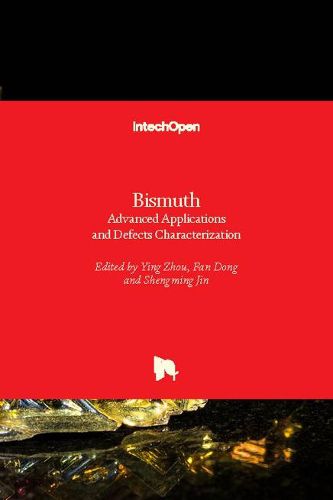
Bismuth (Bi) is a post-transition metal element with the atomic number of 83, which belongs to the pnictogen group elements in Period 6 in the elemental periodic table. As a heavy metal, the hazard of Bi is unusually low in contrast to its neighbors Pb and Sb. This property, along with other typical characteristics like strong diamagnetism and low thermal conductivity, makes Bi attractive in industrial applications. There are more than 100 commercial bismuth products, from pharmaceutical to industrial catalysts. Based on the wide applications of Bi materials, this book goes further and mainly focuses on the potential uses of Bi-based materials, which consist of nine chapters. In addition, a special chapter concerning the defect in bismuth is also presented.
$9.00 standard shipping within Australia
FREE standard shipping within Australia for orders over $100.00
Express & International shipping calculated at checkout
Stock availability can be subject to change without notice. We recommend calling the shop or contacting our online team to check availability of low stock items. Please see our Shopping Online page for more details.
Bismuth (Bi) is a post-transition metal element with the atomic number of 83, which belongs to the pnictogen group elements in Period 6 in the elemental periodic table. As a heavy metal, the hazard of Bi is unusually low in contrast to its neighbors Pb and Sb. This property, along with other typical characteristics like strong diamagnetism and low thermal conductivity, makes Bi attractive in industrial applications. There are more than 100 commercial bismuth products, from pharmaceutical to industrial catalysts. Based on the wide applications of Bi materials, this book goes further and mainly focuses on the potential uses of Bi-based materials, which consist of nine chapters. In addition, a special chapter concerning the defect in bismuth is also presented.
Search our extensive online catalogue.
