Readings Newsletter
Become a Readings Member to make your shopping experience even easier.
Sign in or sign up for free!
You’re not far away from qualifying for FREE standard shipping within Australia
You’ve qualified for FREE standard shipping within Australia
The cart is loading…


This title is printed to order. This book may have been self-published. If so, we cannot guarantee the quality of the content. In the main most books will have gone through the editing process however some may not. We therefore suggest that you be aware of this before ordering this book. If in doubt check either the author or publisher’s details as we are unable to accept any returns unless they are faulty. Please contact us if you have any questions.
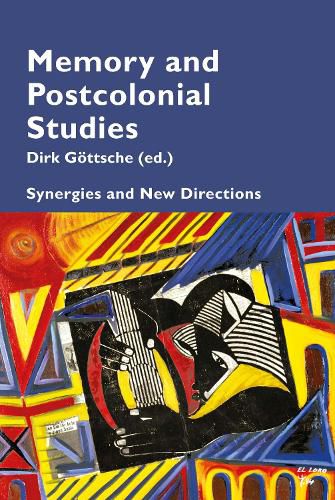
In the postcolonial reassessment of history, the themes of colonialism, decolonisation and individual and collective memory have always been intertwined, but it is only recently that the transcultural turn in memory studies has enabled proper dialogue between memory studies and postcolonial studies. This volume explores the synergies and tensions between memory studies and postcolonial studies across literatures and media from Europe, Africa and the Americas, and intersections with Asia. It makes a unique contribution to this growing international and interdisciplinary field by considering an unprecedented range of languages and sources that promotes dialogue across comparative literature, English and American studies, media studies, history and art history, and modern languages (French, German, Greek, Portuguese, Russian, Serbian-Croatian, Spanish).
Combining theoretical discussion with innovative case studies, the chapters consider various postcolonial politics of memory (with a focus on Africa); diasporic, traumatic and multidirectional memory (M. Rothberg) in postcolonial perspective; performative and linguistic aspects of postcolonial memory; and transcultural memoryscapes ranging from the Black Atlantic to the Indian Ocean, from overseas colonialism to the intra-European legacies of Habsburg, Ottoman and Russian/Soviet imperialism. This far-reaching enquiry promotes comparative postcolonial studies as a means of creating more integrated frames of reference for research and teaching on the interface between memory and postcolonialism.
$9.00 standard shipping within Australia
FREE standard shipping within Australia for orders over $100.00
Express & International shipping calculated at checkout
Stock availability can be subject to change without notice. We recommend calling the shop or contacting our online team to check availability of low stock items. Please see our Shopping Online page for more details.
This title is printed to order. This book may have been self-published. If so, we cannot guarantee the quality of the content. In the main most books will have gone through the editing process however some may not. We therefore suggest that you be aware of this before ordering this book. If in doubt check either the author or publisher’s details as we are unable to accept any returns unless they are faulty. Please contact us if you have any questions.
In the postcolonial reassessment of history, the themes of colonialism, decolonisation and individual and collective memory have always been intertwined, but it is only recently that the transcultural turn in memory studies has enabled proper dialogue between memory studies and postcolonial studies. This volume explores the synergies and tensions between memory studies and postcolonial studies across literatures and media from Europe, Africa and the Americas, and intersections with Asia. It makes a unique contribution to this growing international and interdisciplinary field by considering an unprecedented range of languages and sources that promotes dialogue across comparative literature, English and American studies, media studies, history and art history, and modern languages (French, German, Greek, Portuguese, Russian, Serbian-Croatian, Spanish).
Combining theoretical discussion with innovative case studies, the chapters consider various postcolonial politics of memory (with a focus on Africa); diasporic, traumatic and multidirectional memory (M. Rothberg) in postcolonial perspective; performative and linguistic aspects of postcolonial memory; and transcultural memoryscapes ranging from the Black Atlantic to the Indian Ocean, from overseas colonialism to the intra-European legacies of Habsburg, Ottoman and Russian/Soviet imperialism. This far-reaching enquiry promotes comparative postcolonial studies as a means of creating more integrated frames of reference for research and teaching on the interface between memory and postcolonialism.
Search our extensive online catalogue.
