Readings Newsletter
Become a Readings Member to make your shopping experience even easier.
Sign in or sign up for free!
You’re not far away from qualifying for FREE standard shipping within Australia
You’ve qualified for FREE standard shipping within Australia
The cart is loading…


This title is printed to order. This book may have been self-published. If so, we cannot guarantee the quality of the content. In the main most books will have gone through the editing process however some may not. We therefore suggest that you be aware of this before ordering this book. If in doubt check either the author or publisher’s details as we are unable to accept any returns unless they are faulty. Please contact us if you have any questions.
Create clean code with Dependency Injection principles
Key Features
Use DI to make your code loosely coupled to manage and test your applications easily on Spring 5 and Google Guice Learn the best practices and methodologies to implement DI Write more maintainable Java code by decoupling your objects from their implementations
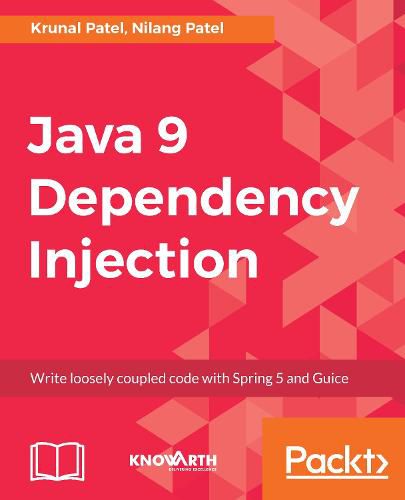
Book DescriptionDependency Injection (DI) is a design pattern that allows us to remove the hard-coded dependencies and make our application loosely coupled, extendable, and maintainable. We can implement DI to move the dependency resolution from compile-time to runtime. This book will be your one stop guide to write loosely coupled code using the latest features of Java 9 with frameworks such as Spring 5 and Google Guice.
We begin by explaining what DI is and teaching you about IoC containers. Then you’ll learn about object compositions and their role in DI. You’ll find out how to build a modular application and learn how to use DI to focus your efforts on the business logic unique to your application and let the framework handle the infrastructure work to put it all together.
Moving on, you’ll gain knowledge of Java 9’s new features and modular framework and how DI works in Java 9. Next, we’ll explore Spring and Guice, the popular frameworks for DI. You’ll see how to define injection keys and configure them at the framework-specific level. After that, you’ll find out about the different types of scopes available in both popular frameworks. You’ll see how to manage dependency of cross-cutting concerns while writing applications through aspect-oriented programming.
Towards the end, you’ll learn to integrate any third-party library in your DI-enabled application and explore common pitfalls and recommendations to build a solid application with the help of best practices, patterns, and anti-patterns in DI.
What you will learn
Understand the benefits of DI and fo from a tightly coupled design to a cleaner design organized around dependencies
See Java 9’s new features and modular framework Set up Guice and Spring in an application so that it can be used for DI Write integration tests for DI applications Use scopes to handle complex application scenarios Integrate any third-party library in your DI-enabled application Implement Aspect-Oriented Programming to handle common cross-cutting concerns such as logging, authentication, and transactions
Understand IoC patterns and anti-patterns in DI
Who this book is forThis book is for Java developers who would like to implement DI in their application. Prior knowledge of the Spring and Guice frameworks and Java programming is assumed.
$9.00 standard shipping within Australia
FREE standard shipping within Australia for orders over $100.00
Express & International shipping calculated at checkout
Stock availability can be subject to change without notice. We recommend calling the shop or contacting our online team to check availability of low stock items. Please see our Shopping Online page for more details.
This title is printed to order. This book may have been self-published. If so, we cannot guarantee the quality of the content. In the main most books will have gone through the editing process however some may not. We therefore suggest that you be aware of this before ordering this book. If in doubt check either the author or publisher’s details as we are unable to accept any returns unless they are faulty. Please contact us if you have any questions.
Create clean code with Dependency Injection principles
Key Features
Use DI to make your code loosely coupled to manage and test your applications easily on Spring 5 and Google Guice Learn the best practices and methodologies to implement DI Write more maintainable Java code by decoupling your objects from their implementations
Book DescriptionDependency Injection (DI) is a design pattern that allows us to remove the hard-coded dependencies and make our application loosely coupled, extendable, and maintainable. We can implement DI to move the dependency resolution from compile-time to runtime. This book will be your one stop guide to write loosely coupled code using the latest features of Java 9 with frameworks such as Spring 5 and Google Guice.
We begin by explaining what DI is and teaching you about IoC containers. Then you’ll learn about object compositions and their role in DI. You’ll find out how to build a modular application and learn how to use DI to focus your efforts on the business logic unique to your application and let the framework handle the infrastructure work to put it all together.
Moving on, you’ll gain knowledge of Java 9’s new features and modular framework and how DI works in Java 9. Next, we’ll explore Spring and Guice, the popular frameworks for DI. You’ll see how to define injection keys and configure them at the framework-specific level. After that, you’ll find out about the different types of scopes available in both popular frameworks. You’ll see how to manage dependency of cross-cutting concerns while writing applications through aspect-oriented programming.
Towards the end, you’ll learn to integrate any third-party library in your DI-enabled application and explore common pitfalls and recommendations to build a solid application with the help of best practices, patterns, and anti-patterns in DI.
What you will learn
Understand the benefits of DI and fo from a tightly coupled design to a cleaner design organized around dependencies
See Java 9’s new features and modular framework Set up Guice and Spring in an application so that it can be used for DI Write integration tests for DI applications Use scopes to handle complex application scenarios Integrate any third-party library in your DI-enabled application Implement Aspect-Oriented Programming to handle common cross-cutting concerns such as logging, authentication, and transactions
Understand IoC patterns and anti-patterns in DI
Who this book is forThis book is for Java developers who would like to implement DI in their application. Prior knowledge of the Spring and Guice frameworks and Java programming is assumed.
Search our extensive online catalogue.
