Readings Newsletter
Become a Readings Member to make your shopping experience even easier.
Sign in or sign up for free!
You’re not far away from qualifying for FREE standard shipping within Australia
You’ve qualified for FREE standard shipping within Australia
The cart is loading…


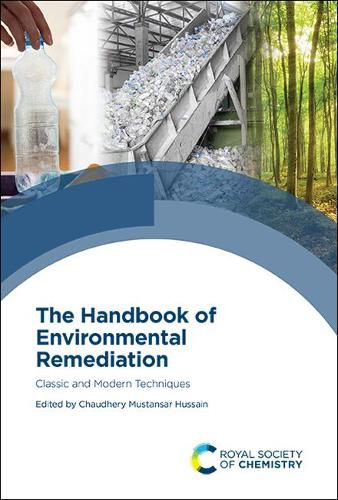
Environmental remediation technologies to control or prevent pollution from hazardous waste material is a growing research area in academia and industry, and is a matter of utmost concern to public health, to improve ecology and to facilitate the redevelopment of a contaminated site. Recently, in situ and ex situ remediation technologies have been developed to rectify the contaminated sites, utilizing various tools and devices through physical, chemical, biological, electrical, and thermal processes to restrain, remove, extract, and immobilize mechanisms to minimize the contamination effects. This handbook brings altogether classical and emerging techniques for hazardous wastes, municipal solid wastes and contaminated water sites, combining chemical, biological and engineering control methods to provide a one-stop reference. This handbook presents a comprehensive and thorough description of several remediation techniques for contaminated sites resulting from both natural processes and anthropogenic activities. Providing critical insights into a range of treatments from chemical oxidation, thermal treatment, air sparging, electrokinetic remediation, stabilization/solidification, permeable reactive barriers, thermal desorption and incineration, phytoremediation, biostimulation and bioaugmentation, bioventing and biosparging through ultrasound-assisted remediation methods, electrochemical remediation methods, and nanoremediation, this handbook provides the reader an inclusive and detailed overview and then discusses future research directions. Closing chapters on green sustainable remediation, economics, health and safety issues, and environmental regulations around site remediation will make this a must-have handbook for those working in the field.
$9.00 standard shipping within Australia
FREE standard shipping within Australia for orders over $100.00
Express & International shipping calculated at checkout
Stock availability can be subject to change without notice. We recommend calling the shop or contacting our online team to check availability of low stock items. Please see our Shopping Online page for more details.
Environmental remediation technologies to control or prevent pollution from hazardous waste material is a growing research area in academia and industry, and is a matter of utmost concern to public health, to improve ecology and to facilitate the redevelopment of a contaminated site. Recently, in situ and ex situ remediation technologies have been developed to rectify the contaminated sites, utilizing various tools and devices through physical, chemical, biological, electrical, and thermal processes to restrain, remove, extract, and immobilize mechanisms to minimize the contamination effects. This handbook brings altogether classical and emerging techniques for hazardous wastes, municipal solid wastes and contaminated water sites, combining chemical, biological and engineering control methods to provide a one-stop reference. This handbook presents a comprehensive and thorough description of several remediation techniques for contaminated sites resulting from both natural processes and anthropogenic activities. Providing critical insights into a range of treatments from chemical oxidation, thermal treatment, air sparging, electrokinetic remediation, stabilization/solidification, permeable reactive barriers, thermal desorption and incineration, phytoremediation, biostimulation and bioaugmentation, bioventing and biosparging through ultrasound-assisted remediation methods, electrochemical remediation methods, and nanoremediation, this handbook provides the reader an inclusive and detailed overview and then discusses future research directions. Closing chapters on green sustainable remediation, economics, health and safety issues, and environmental regulations around site remediation will make this a must-have handbook for those working in the field.
Search our extensive online catalogue.
