Readings Newsletter
Become a Readings Member to make your shopping experience even easier.
Sign in or sign up for free!
You’re not far away from qualifying for FREE standard shipping within Australia
You’ve qualified for FREE standard shipping within Australia
The cart is loading…


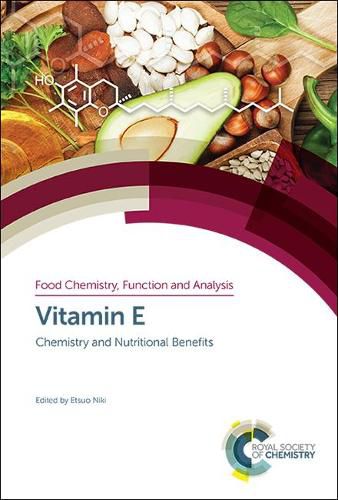
Vitamin E was discovered in 1922 by Evans and Bishop as an essential micronutrient for reproduction in rats. The active substance was isolated in 1936 by Evans and was named tocopherol, although the tocopherols and tocotrienols are actually a group of eight isomeric molecules that are characterized by a chromanol ring structure and a side chain.
Providing an overview of the state-of-the-art of the chemistry of vitamin E, this book reflects the issues stemming from the complexity of the role and actions in vivo as well as in vitro. It summarizes information on the properties and function of vitamin E, the current understanding of the advantages and limitations of it, and also its application in promotion of health and prevention of diseases. Based on sound, solid scientific evidence, this is a timely addition to the literature as the centennial anniversary of the discovery of this important vitamin approaches.
$9.00 standard shipping within Australia
FREE standard shipping within Australia for orders over $100.00
Express & International shipping calculated at checkout
Stock availability can be subject to change without notice. We recommend calling the shop or contacting our online team to check availability of low stock items. Please see our Shopping Online page for more details.
Vitamin E was discovered in 1922 by Evans and Bishop as an essential micronutrient for reproduction in rats. The active substance was isolated in 1936 by Evans and was named tocopherol, although the tocopherols and tocotrienols are actually a group of eight isomeric molecules that are characterized by a chromanol ring structure and a side chain.
Providing an overview of the state-of-the-art of the chemistry of vitamin E, this book reflects the issues stemming from the complexity of the role and actions in vivo as well as in vitro. It summarizes information on the properties and function of vitamin E, the current understanding of the advantages and limitations of it, and also its application in promotion of health and prevention of diseases. Based on sound, solid scientific evidence, this is a timely addition to the literature as the centennial anniversary of the discovery of this important vitamin approaches.
Search our extensive online catalogue.
