Readings Newsletter
Become a Readings Member to make your shopping experience even easier.
Sign in or sign up for free!
You’re not far away from qualifying for FREE standard shipping within Australia
You’ve qualified for FREE standard shipping within Australia
The cart is loading…


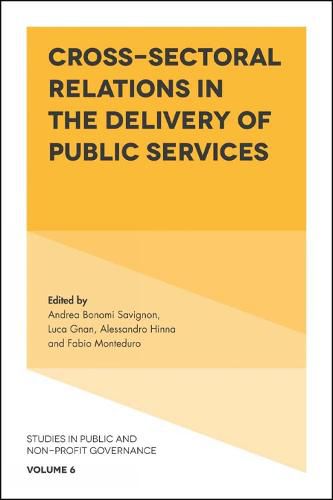
The complex and ever-evolving relationship between the public sector and civil society at large is high on the policy and political agenda for the transformation of administrative and socio-economic systems in most developed countries. In this context, citizen associations, private businesses and non-profit organizations play a crucial role as potential actors of collaborative governance arrangements for both the prioritization and direct provision of public interest services. These settings are increasingly seen as powerful policy tools by which States may not only address issues related to the expenditure constraints which, in the current public financial situation, contingently limit and condition the direct delivery of such services by public institutions. They are also viewed as an opportunity for a definitive shift from traditional models of public administration in the sense that policies may be better designed, articulated, and governed through a collaborative approach, while service provision could be enhanced in terms of proximity, representativeness and innovativeness.
This book assesses these cross-sectoral relations across the public sector from a variety of contexts. Chapters consider public service design, public governance systems, philanthropy, housing policies, performance management and a number of other issues across national and comparative settings.
$9.00 standard shipping within Australia
FREE standard shipping within Australia for orders over $100.00
Express & International shipping calculated at checkout
Stock availability can be subject to change without notice. We recommend calling the shop or contacting our online team to check availability of low stock items. Please see our Shopping Online page for more details.
The complex and ever-evolving relationship between the public sector and civil society at large is high on the policy and political agenda for the transformation of administrative and socio-economic systems in most developed countries. In this context, citizen associations, private businesses and non-profit organizations play a crucial role as potential actors of collaborative governance arrangements for both the prioritization and direct provision of public interest services. These settings are increasingly seen as powerful policy tools by which States may not only address issues related to the expenditure constraints which, in the current public financial situation, contingently limit and condition the direct delivery of such services by public institutions. They are also viewed as an opportunity for a definitive shift from traditional models of public administration in the sense that policies may be better designed, articulated, and governed through a collaborative approach, while service provision could be enhanced in terms of proximity, representativeness and innovativeness.
This book assesses these cross-sectoral relations across the public sector from a variety of contexts. Chapters consider public service design, public governance systems, philanthropy, housing policies, performance management and a number of other issues across national and comparative settings.
Search our extensive online catalogue.
