Readings Newsletter
Become a Readings Member to make your shopping experience even easier.
Sign in or sign up for free!
You’re not far away from qualifying for FREE standard shipping within Australia
You’ve qualified for FREE standard shipping within Australia
The cart is loading…


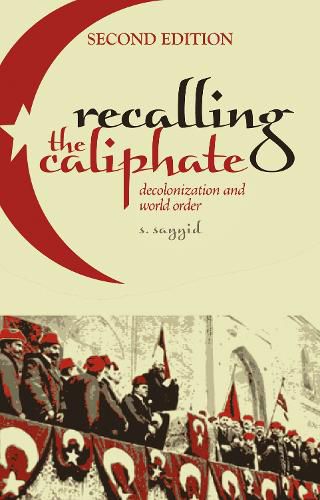
As late as the last quarter of the twentieth century there were expectations that Islam’s political and cultural influence would dissipate as the advance of westernization brought modernization and secularization in its wake. Not only has Islam failed to follow the trajectory pursued by variants of Christianity, namely confinement to the private sphere and depoliticisation, but it has also forcefully re-asserted itself as mobilizations in its name challenge the global order in a series of geopolitical, cultural and philosophical struggles. The continuing (if not growing) relevance of Islam suggests that global history cannot simply be presented as a scaled up version of that of the West. Quests for Muslim autonomy present themselves in several forms - local and global, extremist and moderate, conservative and revisionist - in the light of which the recycling of conventional narratives about Islam becomes increasingly problematic. Not only are these accounts inadequate for understanding Muslim experiences, but by relying on them many Western governments pursue policies that are counter-productive and ultimately hazardous for Muslims and non-Muslims alike. Recalling the Caliphate engages critically with the interaction between Islam and the political in context of a post colonial world that continues to resist profound decolonization. In the first part of this book Sayyid focuses on how demands for Muslim autonomy are debated in terms such as democracy, cultural relativism, secularism and liberalism. Each chapter analyzes the displacements and evasions by which the decolonization of the Muslim world continues to be deflected and deferred, while the latter part of the book builds on this critique, exploring and attempts to accelerate the decolonization of the Muslim Ummah.
$9.00 standard shipping within Australia
FREE standard shipping within Australia for orders over $100.00
Express & International shipping calculated at checkout
Stock availability can be subject to change without notice. We recommend calling the shop or contacting our online team to check availability of low stock items. Please see our Shopping Online page for more details.
As late as the last quarter of the twentieth century there were expectations that Islam’s political and cultural influence would dissipate as the advance of westernization brought modernization and secularization in its wake. Not only has Islam failed to follow the trajectory pursued by variants of Christianity, namely confinement to the private sphere and depoliticisation, but it has also forcefully re-asserted itself as mobilizations in its name challenge the global order in a series of geopolitical, cultural and philosophical struggles. The continuing (if not growing) relevance of Islam suggests that global history cannot simply be presented as a scaled up version of that of the West. Quests for Muslim autonomy present themselves in several forms - local and global, extremist and moderate, conservative and revisionist - in the light of which the recycling of conventional narratives about Islam becomes increasingly problematic. Not only are these accounts inadequate for understanding Muslim experiences, but by relying on them many Western governments pursue policies that are counter-productive and ultimately hazardous for Muslims and non-Muslims alike. Recalling the Caliphate engages critically with the interaction between Islam and the political in context of a post colonial world that continues to resist profound decolonization. In the first part of this book Sayyid focuses on how demands for Muslim autonomy are debated in terms such as democracy, cultural relativism, secularism and liberalism. Each chapter analyzes the displacements and evasions by which the decolonization of the Muslim world continues to be deflected and deferred, while the latter part of the book builds on this critique, exploring and attempts to accelerate the decolonization of the Muslim Ummah.
Search our extensive online catalogue.
