Readings Newsletter
Become a Readings Member to make your shopping experience even easier.
Sign in or sign up for free!
You’re not far away from qualifying for FREE standard shipping within Australia
You’ve qualified for FREE standard shipping within Australia
The cart is loading…


In recent years, political and social theory has been transformed by the heterogeneous approaches to feeling and emotion jointly referred to as ‘affect theory’. These range from psychological and social-constructivist approaches to emotion to feminist and post-human perspectives. Covering a wide spectrum of topics and ethnographic contexts-from engineering in the Andes to household rituals in rural China, from South African land restitution to migrant living in Moscow, and from elections in El Salvador to online and offline surveillance among political refugees from Uzbekistan and Eritrea-the chapters in this volume interrogate this ‘affective turn’ through the lens of fine-grained ethnographies of the state. The volume enhances the anthropological understanding of the various ways through which the state comes to be experienced as a visceral presence in social life.
$9.00 standard shipping within Australia
FREE standard shipping within Australia for orders over $100.00
Express & International shipping calculated at checkout
Stock availability can be subject to change without notice. We recommend calling the shop or contacting our online team to check availability of low stock items. Please see our Shopping Online page for more details.
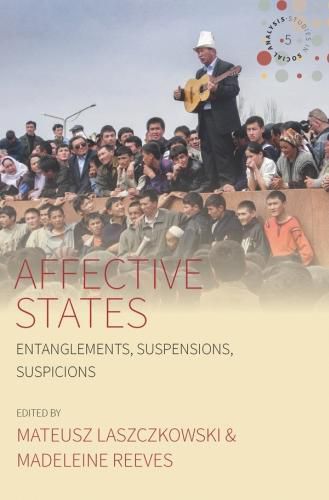
In recent years, political and social theory has been transformed by the heterogeneous approaches to feeling and emotion jointly referred to as ‘affect theory’. These range from psychological and social-constructivist approaches to emotion to feminist and post-human perspectives. Covering a wide spectrum of topics and ethnographic contexts-from engineering in the Andes to household rituals in rural China, from South African land restitution to migrant living in Moscow, and from elections in El Salvador to online and offline surveillance among political refugees from Uzbekistan and Eritrea-the chapters in this volume interrogate this ‘affective turn’ through the lens of fine-grained ethnographies of the state. The volume enhances the anthropological understanding of the various ways through which the state comes to be experienced as a visceral presence in social life.
Search our extensive online catalogue.
