Readings Newsletter
Become a Readings Member to make your shopping experience even easier.
Sign in or sign up for free!
You’re not far away from qualifying for FREE standard shipping within Australia
You’ve qualified for FREE standard shipping within Australia
The cart is loading…


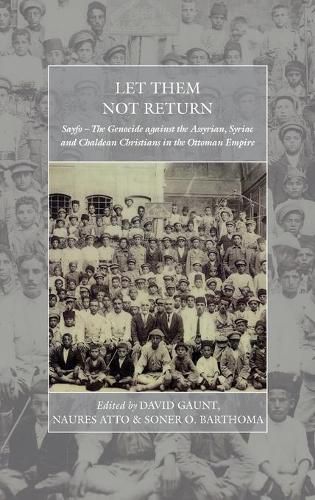
The mass killing of Ottoman Armenians is today widely recognized, both within and outside scholarly circles, as an act of genocide. What is less well known, however, is that it took place within a broader context of Ottoman violence against minority groups during and after the First World War. Among those populations decimated were the indigenous Christian Assyrians (also known as Syriacs or Chaldeans) who lived in the borderlands of present-day Turkey, Iran, and Iraq. This volume is the first scholarly edited collection focused on the Assyrian genocide, or Sayfo (literally, sword in Aramaic), presenting historical, psychological, anthropological, and political perspectives that shed much-needed light on a neglected historical atrocity.
$9.00 standard shipping within Australia
FREE standard shipping within Australia for orders over $100.00
Express & International shipping calculated at checkout
Stock availability can be subject to change without notice. We recommend calling the shop or contacting our online team to check availability of low stock items. Please see our Shopping Online page for more details.
The mass killing of Ottoman Armenians is today widely recognized, both within and outside scholarly circles, as an act of genocide. What is less well known, however, is that it took place within a broader context of Ottoman violence against minority groups during and after the First World War. Among those populations decimated were the indigenous Christian Assyrians (also known as Syriacs or Chaldeans) who lived in the borderlands of present-day Turkey, Iran, and Iraq. This volume is the first scholarly edited collection focused on the Assyrian genocide, or Sayfo (literally, sword in Aramaic), presenting historical, psychological, anthropological, and political perspectives that shed much-needed light on a neglected historical atrocity.
Search our extensive online catalogue.
