Readings Newsletter
Become a Readings Member to make your shopping experience even easier.
Sign in or sign up for free!
You’re not far away from qualifying for FREE standard shipping within Australia
You’ve qualified for FREE standard shipping within Australia
The cart is loading…


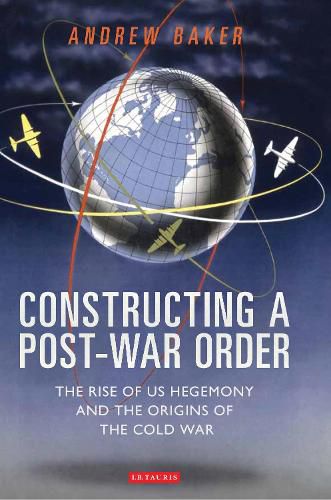
The years 1942 to 1946 saw the acceleration of World War II, its conclusion, and the construction of a post-war order that was to culminate in the Cold War. Andrew Baker here examines the expansion of US political and economic power, and hegemony during this period, and the extent to which smaller states, particularly Australia, New Zealand, Canada, and South Africa, contested this expansion. Through successfully outlining and defending their own notions of sovereignty, property, and commercial rights, they were able to a make a significant contribution towards fashioning a post-war framework more conducive to states than empires. This analysis of the period immediately after World War II will appeal to researchers of history and international relations, as well as those interested in the political economy of the post-war world.
$9.00 standard shipping within Australia
FREE standard shipping within Australia for orders over $100.00
Express & International shipping calculated at checkout
Stock availability can be subject to change without notice. We recommend calling the shop or contacting our online team to check availability of low stock items. Please see our Shopping Online page for more details.
The years 1942 to 1946 saw the acceleration of World War II, its conclusion, and the construction of a post-war order that was to culminate in the Cold War. Andrew Baker here examines the expansion of US political and economic power, and hegemony during this period, and the extent to which smaller states, particularly Australia, New Zealand, Canada, and South Africa, contested this expansion. Through successfully outlining and defending their own notions of sovereignty, property, and commercial rights, they were able to a make a significant contribution towards fashioning a post-war framework more conducive to states than empires. This analysis of the period immediately after World War II will appeal to researchers of history and international relations, as well as those interested in the political economy of the post-war world.
Search our extensive online catalogue.
