Readings Newsletter
Become a Readings Member to make your shopping experience even easier.
Sign in or sign up for free!
You’re not far away from qualifying for FREE standard shipping within Australia
You’ve qualified for FREE standard shipping within Australia
The cart is loading…


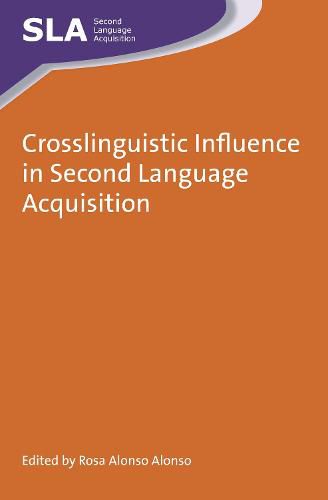
This volume provides an unprecedented insight into current approaches to crosslinguistic influence (CLI). The collection investigates a range of themes including linguistic relativity, the possible contributions of neurolinguistics, the problem of cognitive development and the role of the frequency of structures in acquisition from distinct, overlapping and complementary perspectives. Chapters focusing on vocabulary, morphosyntactic categories, semantic structures, and phonetic and phonological structures feature in the volume, as do over 20 languages, in order to offer new insights into both theoretical and empirical issues in CLI, including the consequences of great or little similarity in structures between languages. The relevance of CLI research for teaching is discussed in a number of chapters, as is the phenomenon of multilingualism. The collection will appeal to researchers, graduate and postgraduate students, teachers and professionals interested in the field of CLI in SLA.
$9.00 standard shipping within Australia
FREE standard shipping within Australia for orders over $100.00
Express & International shipping calculated at checkout
Stock availability can be subject to change without notice. We recommend calling the shop or contacting our online team to check availability of low stock items. Please see our Shopping Online page for more details.
This volume provides an unprecedented insight into current approaches to crosslinguistic influence (CLI). The collection investigates a range of themes including linguistic relativity, the possible contributions of neurolinguistics, the problem of cognitive development and the role of the frequency of structures in acquisition from distinct, overlapping and complementary perspectives. Chapters focusing on vocabulary, morphosyntactic categories, semantic structures, and phonetic and phonological structures feature in the volume, as do over 20 languages, in order to offer new insights into both theoretical and empirical issues in CLI, including the consequences of great or little similarity in structures between languages. The relevance of CLI research for teaching is discussed in a number of chapters, as is the phenomenon of multilingualism. The collection will appeal to researchers, graduate and postgraduate students, teachers and professionals interested in the field of CLI in SLA.
Search our extensive online catalogue.
