Readings Newsletter
Become a Readings Member to make your shopping experience even easier.
Sign in or sign up for free!
You’re not far away from qualifying for FREE standard shipping within Australia
You’ve qualified for FREE standard shipping within Australia
The cart is loading…


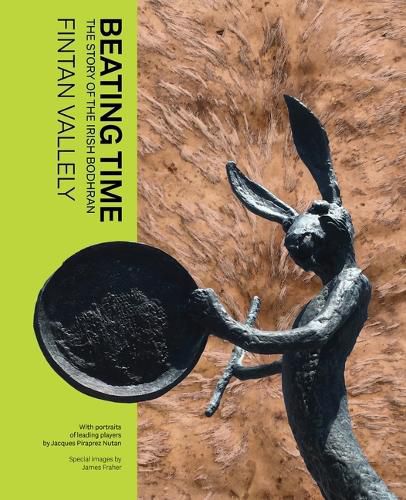
The Irish frame drum that we know as 'bodhran' first entered modern-day Irish consciousness in 1959 with John B. Keane's use of a tambourine in his play Sive at the Abbey Theatre, Dublin. From 1960 onwards, it gained tremendous visibility in the traditional music revival through Sean O Riada's Radio Eireann ensemble Ceoltoiri Chualann, then by the Chieftains, and, later, by the Bothy Band, Planxty, Christy Moore and De Dannan. By the end of the century, tens of thousands of bodhrans had been made and dispersed worldwide, and the instrument was a staple in traditional music promoted by Comhaltas Ceoltoiri Eireann. Today the drum holds a remarkable symbolic presence not only in Irish music, but also in tourism and in sport, to the extent that it rivals the harp as a national emblem. To date there has been no coherent picture of how the bodhran could appear so suddenly in the twentieth century. Its name is certainly old - a word once used for a device which was created millennia ago as an agricultural tool, a container and tray. But as a percussion form with the sophistication that we know it today its traceable history is short, beginning sporadically only in the earlier 1800s, and mostly happening since c.1960, shaped by ingenious stylists, most of whom are indeed still performing among us. Beating Time explores this history for the first time. It radically acknowledges not only the influence of the music trade and British military bands, but that of the touring ensembles that were the roots of today's popular music - the American 'blackface' minstrels. The study also examines the use of tambourines on the 'Wren', and the morphing of this into accompaniment and solo playing in today's 'listening' traditional music. Perhaps most remarkable is the unspoken re-branding of the tambourine as 'bodhran', and its kindling, liberation and validation of the percussion impulse in traditional music. Rather than mythicising the bodhran as the oldest Irish music instrument, this book points to the idea that it should perhaps be celebrated for being the newest. Its rapid emergence and transformation is as remarkable and astonishing an ascent in universal popularity and international acceptance as has been the worldwide rise of the guitar in all music.
$9.00 standard shipping within Australia
FREE standard shipping within Australia for orders over $100.00
Express & International shipping calculated at checkout
Stock availability can be subject to change without notice. We recommend calling the shop or contacting our online team to check availability of low stock items. Please see our Shopping Online page for more details.
The Irish frame drum that we know as 'bodhran' first entered modern-day Irish consciousness in 1959 with John B. Keane's use of a tambourine in his play Sive at the Abbey Theatre, Dublin. From 1960 onwards, it gained tremendous visibility in the traditional music revival through Sean O Riada's Radio Eireann ensemble Ceoltoiri Chualann, then by the Chieftains, and, later, by the Bothy Band, Planxty, Christy Moore and De Dannan. By the end of the century, tens of thousands of bodhrans had been made and dispersed worldwide, and the instrument was a staple in traditional music promoted by Comhaltas Ceoltoiri Eireann. Today the drum holds a remarkable symbolic presence not only in Irish music, but also in tourism and in sport, to the extent that it rivals the harp as a national emblem. To date there has been no coherent picture of how the bodhran could appear so suddenly in the twentieth century. Its name is certainly old - a word once used for a device which was created millennia ago as an agricultural tool, a container and tray. But as a percussion form with the sophistication that we know it today its traceable history is short, beginning sporadically only in the earlier 1800s, and mostly happening since c.1960, shaped by ingenious stylists, most of whom are indeed still performing among us. Beating Time explores this history for the first time. It radically acknowledges not only the influence of the music trade and British military bands, but that of the touring ensembles that were the roots of today's popular music - the American 'blackface' minstrels. The study also examines the use of tambourines on the 'Wren', and the morphing of this into accompaniment and solo playing in today's 'listening' traditional music. Perhaps most remarkable is the unspoken re-branding of the tambourine as 'bodhran', and its kindling, liberation and validation of the percussion impulse in traditional music. Rather than mythicising the bodhran as the oldest Irish music instrument, this book points to the idea that it should perhaps be celebrated for being the newest. Its rapid emergence and transformation is as remarkable and astonishing an ascent in universal popularity and international acceptance as has been the worldwide rise of the guitar in all music.
Search our extensive online catalogue.
