Readings Newsletter
Become a Readings Member to make your shopping experience even easier.
Sign in or sign up for free!
You’re not far away from qualifying for FREE standard shipping within Australia
You’ve qualified for FREE standard shipping within Australia
The cart is loading…


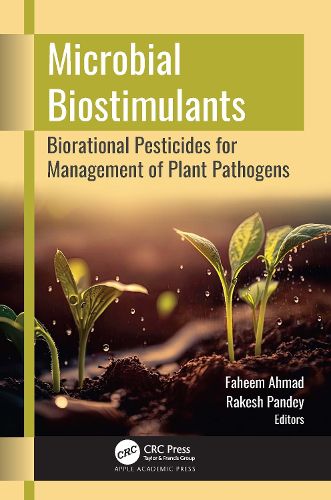
This new volume explores the field of microbial biostimulants, a new and emerging field of plant study that emphasizes the benefit of microbes for plants. Microbial biostimulants can have a positive influence on plant health and growth, enhancing agricultural yield and improving resistance to negative environmental changes with zero harmful discharges.
This book, Microbial Biostimulants: Biorational Pesticides for Management of Plant Pathogens, explores how microbial-based biopesticides can be used for managing pests and plant diseases as well as for the promotion of growth. It looks at the advantages of employing microbial biostimulants over other pest and disease control methods. It also looks at the application of microbial biostimulants as a response to the modern agricultural need for increased productivity and plant health.
This book brings together an extensive collection of information on beneficial microorganisms, including newly introduced microorganisms, their biological activities and specificity, resistance mechanisms to pests, formulation, application in agricultural practices, etc.
Key features:
Provides a roadmap for using microbial biostimulant practices for pest and disease control as a sustainable approach in agriculture Covers the essential aspects of biorational lines for crop stress management Looks at the use of microbial biostimulants for management of specific diseases, including root-knot disease, various soil-borne diseases, etc. Considers the role of rhizobacteria in plant disease management
Microbial Biostimulants: Biorational Pesticides for Management of Plant Pathogens will be extremely useful for students, academicians, researchers, and policymakers in the field of food security and diverse disciplines of agricultural sciences.
$9.00 standard shipping within Australia
FREE standard shipping within Australia for orders over $100.00
Express & International shipping calculated at checkout
Stock availability can be subject to change without notice. We recommend calling the shop or contacting our online team to check availability of low stock items. Please see our Shopping Online page for more details.
This new volume explores the field of microbial biostimulants, a new and emerging field of plant study that emphasizes the benefit of microbes for plants. Microbial biostimulants can have a positive influence on plant health and growth, enhancing agricultural yield and improving resistance to negative environmental changes with zero harmful discharges.
This book, Microbial Biostimulants: Biorational Pesticides for Management of Plant Pathogens, explores how microbial-based biopesticides can be used for managing pests and plant diseases as well as for the promotion of growth. It looks at the advantages of employing microbial biostimulants over other pest and disease control methods. It also looks at the application of microbial biostimulants as a response to the modern agricultural need for increased productivity and plant health.
This book brings together an extensive collection of information on beneficial microorganisms, including newly introduced microorganisms, their biological activities and specificity, resistance mechanisms to pests, formulation, application in agricultural practices, etc.
Key features:
Provides a roadmap for using microbial biostimulant practices for pest and disease control as a sustainable approach in agriculture Covers the essential aspects of biorational lines for crop stress management Looks at the use of microbial biostimulants for management of specific diseases, including root-knot disease, various soil-borne diseases, etc. Considers the role of rhizobacteria in plant disease management
Microbial Biostimulants: Biorational Pesticides for Management of Plant Pathogens will be extremely useful for students, academicians, researchers, and policymakers in the field of food security and diverse disciplines of agricultural sciences.
Search our extensive online catalogue.
