Readings Newsletter
Become a Readings Member to make your shopping experience even easier.
Sign in or sign up for free!
You’re not far away from qualifying for FREE standard shipping within Australia
You’ve qualified for FREE standard shipping within Australia
The cart is loading…


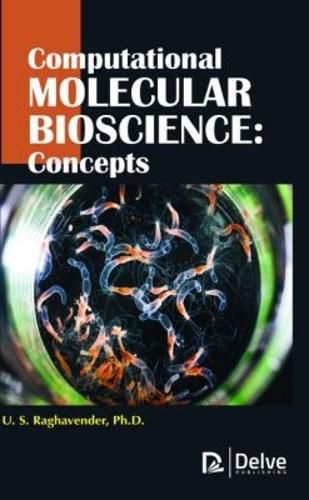
This preface provides information that I would recommend for someone reading and using the book. This book is written keeping in mind the undergraduates and graduates studying life sciences in universities. This could serve as a supplement for people involved in research.
With the flood of genomics and proteomics data, it is imperative that students in biology have a basic understanding of the data in biological repositories. Academic institutions and focussed organizations in genomics and proteomic research, in today’s world, share both raw and processed data in dedicated servers. These datasets are accessible, for free, to anybody on this planet. Under-standing how these datasets were produced requires one to study the research which prompted their existence (for example PDB or UniProt). This comprehension can result in a greater appreciation of the resource. We have provided as much information as is needed to jumpstart a curious reader’s comprehension of the actual data from the repositories using computers.
The information processing done in biology using computation (algorithms) constitutes what is known as Computational Biology. The algorithms could be graded from simple to complex, based on the assumptions employed. In this book, we present basic concepts in computational molecular biology in the form of simple capsules. What I mean by that is the reader, with a laptop or a computer, can immediately start executing the code in the book to understand the concepts at a deeper level. As the focus is not on algorithms, we have kept the language quite simple. The places which demand detailed explanation have been dealt with accordingly. Otherwise, the presentation has been kept short. Basically, we start from sequences, then go to structures and try to find an evolutionary connection between sequences and structures.
Every chapter begins with a small introduction followed by explanation of concepts and a simple example. Computational Code is given in bounded box, and in a font (Centaur) different from the rest of the text (Times New Roman). References are provided at the end of each chapter, as needed. Each chapter is written to be self contained. I would also suggest that the reader become familiar with IPython or Jupyter notebooks and RStudio. Most of the code in this book has been tested on these notebooks and should be reproducible. Finally, I hope that this book will help readers use computers and or laptops productively in their studies in the field of computational biosciences.
$9.00 standard shipping within Australia
FREE standard shipping within Australia for orders over $100.00
Express & International shipping calculated at checkout
Stock availability can be subject to change without notice. We recommend calling the shop or contacting our online team to check availability of low stock items. Please see our Shopping Online page for more details.
This preface provides information that I would recommend for someone reading and using the book. This book is written keeping in mind the undergraduates and graduates studying life sciences in universities. This could serve as a supplement for people involved in research.
With the flood of genomics and proteomics data, it is imperative that students in biology have a basic understanding of the data in biological repositories. Academic institutions and focussed organizations in genomics and proteomic research, in today’s world, share both raw and processed data in dedicated servers. These datasets are accessible, for free, to anybody on this planet. Under-standing how these datasets were produced requires one to study the research which prompted their existence (for example PDB or UniProt). This comprehension can result in a greater appreciation of the resource. We have provided as much information as is needed to jumpstart a curious reader’s comprehension of the actual data from the repositories using computers.
The information processing done in biology using computation (algorithms) constitutes what is known as Computational Biology. The algorithms could be graded from simple to complex, based on the assumptions employed. In this book, we present basic concepts in computational molecular biology in the form of simple capsules. What I mean by that is the reader, with a laptop or a computer, can immediately start executing the code in the book to understand the concepts at a deeper level. As the focus is not on algorithms, we have kept the language quite simple. The places which demand detailed explanation have been dealt with accordingly. Otherwise, the presentation has been kept short. Basically, we start from sequences, then go to structures and try to find an evolutionary connection between sequences and structures.
Every chapter begins with a small introduction followed by explanation of concepts and a simple example. Computational Code is given in bounded box, and in a font (Centaur) different from the rest of the text (Times New Roman). References are provided at the end of each chapter, as needed. Each chapter is written to be self contained. I would also suggest that the reader become familiar with IPython or Jupyter notebooks and RStudio. Most of the code in this book has been tested on these notebooks and should be reproducible. Finally, I hope that this book will help readers use computers and or laptops productively in their studies in the field of computational biosciences.
Search our extensive online catalogue.
