Readings Newsletter
Become a Readings Member to make your shopping experience even easier.
Sign in or sign up for free!
You’re not far away from qualifying for FREE standard shipping within Australia
You’ve qualified for FREE standard shipping within Australia
The cart is loading…


This title is printed to order. This book may have been self-published. If so, we cannot guarantee the quality of the content. In the main most books will have gone through the editing process however some may not. We therefore suggest that you be aware of this before ordering this book. If in doubt check either the author or publisher’s details as we are unable to accept any returns unless they are faulty. Please contact us if you have any questions.
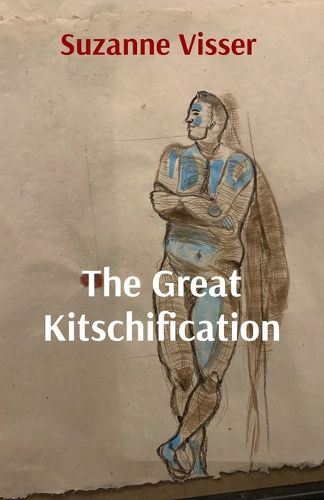
The essays gathered in The Great Kitschification are an aesthetic diagnosis, surgically precise and intellectually generous, of true art versus the simulation of art called kitsch.
Suzanne Visser ties together the sensibilities of artists who could never be mistaken for kitsch to extract from their work something elemental: the stubborn trace of a human at risk.
They are the ground of Suzanne's claim: that art is not reducible to output, but emerges from a condition of attention no machine can replicate.
Visser shows how easily an aesthetic of abundance-instant variation, infinite remix-can flood the eye while starving the soul. What is lost, she argues, is not originality per se, but orientation: the slow attunement that links gesture to meaning and maker to world.
These essays invite, with uncommon clarity, a form of looking that resists the quick reward. The defense of authenticity here is not moralistic. It is procedural. Visser asks: How was this made? By whom? Under what constraints? These questions are not barriers to appreciation, but its preconditions.
Why does this matter now? Because we stand at a moment when the apparatus of imitation is accelerating faster than our ability to discern what is being lost. Visser's book argues for human specificity. For the value of friction. For the slowness of bodies and hands, and the imperfect echo of memory in material. What is offered here is not a doctrine, but a form of resistance-not anti-AI, but pro-art.
$9.00 standard shipping within Australia
FREE standard shipping within Australia for orders over $100.00
Express & International shipping calculated at checkout
Stock availability can be subject to change without notice. We recommend calling the shop or contacting our online team to check availability of low stock items. Please see our Shopping Online page for more details.
This title is printed to order. This book may have been self-published. If so, we cannot guarantee the quality of the content. In the main most books will have gone through the editing process however some may not. We therefore suggest that you be aware of this before ordering this book. If in doubt check either the author or publisher’s details as we are unable to accept any returns unless they are faulty. Please contact us if you have any questions.
The essays gathered in The Great Kitschification are an aesthetic diagnosis, surgically precise and intellectually generous, of true art versus the simulation of art called kitsch.
Suzanne Visser ties together the sensibilities of artists who could never be mistaken for kitsch to extract from their work something elemental: the stubborn trace of a human at risk.
They are the ground of Suzanne's claim: that art is not reducible to output, but emerges from a condition of attention no machine can replicate.
Visser shows how easily an aesthetic of abundance-instant variation, infinite remix-can flood the eye while starving the soul. What is lost, she argues, is not originality per se, but orientation: the slow attunement that links gesture to meaning and maker to world.
These essays invite, with uncommon clarity, a form of looking that resists the quick reward. The defense of authenticity here is not moralistic. It is procedural. Visser asks: How was this made? By whom? Under what constraints? These questions are not barriers to appreciation, but its preconditions.
Why does this matter now? Because we stand at a moment when the apparatus of imitation is accelerating faster than our ability to discern what is being lost. Visser's book argues for human specificity. For the value of friction. For the slowness of bodies and hands, and the imperfect echo of memory in material. What is offered here is not a doctrine, but a form of resistance-not anti-AI, but pro-art.
Search our extensive online catalogue.
