Readings Newsletter
Become a Readings Member to make your shopping experience even easier.
Sign in or sign up for free!
You’re not far away from qualifying for FREE standard shipping within Australia
You’ve qualified for FREE standard shipping within Australia
The cart is loading…


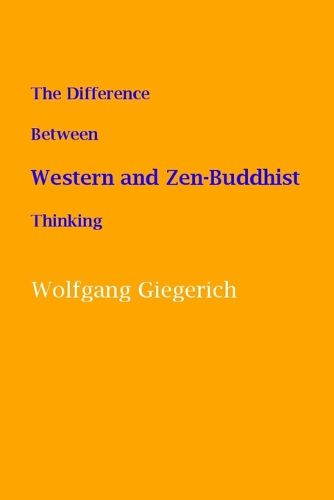
When psychology turns to religions or other cultural traditions and phenomena, it looks at them with a different objective from the one that such disciplines as that of history or religious studies have. Psychology views these phenomena as products and manifestations of the soul. Instead of trying to find out what a culture's highest values, teachings and convictions mean, psychology has rather the task of seeing through to the soul's logical life that animates them. It is in this spirit that this book examines such a Zen-Buddhist goal as the Great Awakening, the ontology of Emptiness, the thesis of the absolute oneness of knower and known, and the "aesthetic solution" to conflicts characteristic of Zeninspired Japan, and confronts and contrasts them with the soul dynamic at work in phenomena most representative of Western thinking, such as the emergence of the monotheistic God, the implications of the Socratic dictum, "I know that I know nothing", and the Western I. This confrontation sharpens the mutual contours. The analyses of this book may help Japanese readers to grasp more clearly the inner logic of Zen and their own culture, while reminding Western readers of their own Western tradition, its pulsating inner life, and what is at stake in it.
$9.00 standard shipping within Australia
FREE standard shipping within Australia for orders over $100.00
Express & International shipping calculated at checkout
Stock availability can be subject to change without notice. We recommend calling the shop or contacting our online team to check availability of low stock items. Please see our Shopping Online page for more details.
When psychology turns to religions or other cultural traditions and phenomena, it looks at them with a different objective from the one that such disciplines as that of history or religious studies have. Psychology views these phenomena as products and manifestations of the soul. Instead of trying to find out what a culture's highest values, teachings and convictions mean, psychology has rather the task of seeing through to the soul's logical life that animates them. It is in this spirit that this book examines such a Zen-Buddhist goal as the Great Awakening, the ontology of Emptiness, the thesis of the absolute oneness of knower and known, and the "aesthetic solution" to conflicts characteristic of Zeninspired Japan, and confronts and contrasts them with the soul dynamic at work in phenomena most representative of Western thinking, such as the emergence of the monotheistic God, the implications of the Socratic dictum, "I know that I know nothing", and the Western I. This confrontation sharpens the mutual contours. The analyses of this book may help Japanese readers to grasp more clearly the inner logic of Zen and their own culture, while reminding Western readers of their own Western tradition, its pulsating inner life, and what is at stake in it.
Search our extensive online catalogue.
