Readings Newsletter
Become a Readings Member to make your shopping experience even easier.
Sign in or sign up for free!
You’re not far away from qualifying for FREE standard shipping within Australia
You’ve qualified for FREE standard shipping within Australia
The cart is loading…


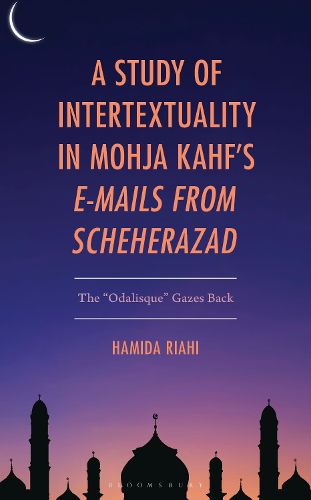
In this book, Hamida Riahi explores the powerful use of intertextuality in Mohja Kahf's E-Mails from Scheherazad, focusing on how parody and allusion work to deconstruct Orientalist discourses surrounding Muslim women. Through a parodic rewriting of The Thousand and One Nights, the Shakespearean sonnet genre, and Matisse's paintings, Kahf dismantles reductive stereotypes imposed on Muslim women and revises the dominant Western narratives that portray Muslim women as oppressed and voiceless. Riahi explores how the Kahf draws upon allusion to Islamic history and the Qur'an, invoking iconic figures such as Aisha, Khadija, Esther, Zuleika, and others, to offer a counter-narrative that challenges both Western feminist perspectives and entrenched patriarchal views. Through this dual approach, Kahf not only critiques the historical and cultural misconceptions imposed by the West but also affirms the rich, complex identities of Muslim women. The author's examination provides a fresh perspective on the intersection of postcolonial feminism, Islamic feminism, and literary innovation.
$9.00 standard shipping within Australia
FREE standard shipping within Australia for orders over $100.00
Express & International shipping calculated at checkout
Stock availability can be subject to change without notice. We recommend calling the shop or contacting our online team to check availability of low stock items. Please see our Shopping Online page for more details.
In this book, Hamida Riahi explores the powerful use of intertextuality in Mohja Kahf's E-Mails from Scheherazad, focusing on how parody and allusion work to deconstruct Orientalist discourses surrounding Muslim women. Through a parodic rewriting of The Thousand and One Nights, the Shakespearean sonnet genre, and Matisse's paintings, Kahf dismantles reductive stereotypes imposed on Muslim women and revises the dominant Western narratives that portray Muslim women as oppressed and voiceless. Riahi explores how the Kahf draws upon allusion to Islamic history and the Qur'an, invoking iconic figures such as Aisha, Khadija, Esther, Zuleika, and others, to offer a counter-narrative that challenges both Western feminist perspectives and entrenched patriarchal views. Through this dual approach, Kahf not only critiques the historical and cultural misconceptions imposed by the West but also affirms the rich, complex identities of Muslim women. The author's examination provides a fresh perspective on the intersection of postcolonial feminism, Islamic feminism, and literary innovation.
Search our extensive online catalogue.
