Readings Newsletter
Become a Readings Member to make your shopping experience even easier.
Sign in or sign up for free!
You’re not far away from qualifying for FREE standard shipping within Australia
You’ve qualified for FREE standard shipping within Australia
The cart is loading…


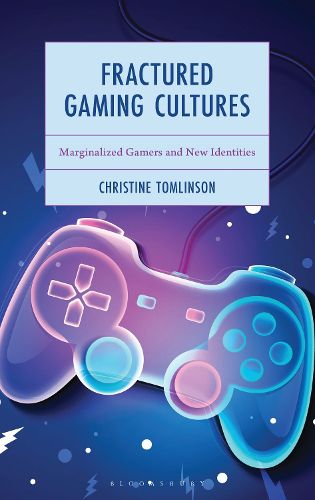
Christine Tomlinson demonstrates how embracing and engaging with personal identity-both positively and negatively-has led gaming culture to evolve past the monolith of the stereotypical "gamer" image that exists within the popular imaginary to offer marginalized players safety and community online. In light of the dichotomy between the hegemonic ideals of who a "gamer" should be-stereotypically young, heterosexual white boys and men-and the reality of diverse gaming audiences, Tomlinson observes how marginalized players have formed their own communities grounded in shared identity and experience. These communities, she contends, allow players to produce new individual and shared gaming identities and cultures as acts of resistance and resilience, through which they can reclaim a position in an often-hostile environment and a slowly changing industry. Ultimately, Tomlinson argues that while these alternative communities should not need to exist, they have paved the way for a fracturing of gaming culture that provides marginalized players with safe and productive outlets for discussion and community.
$9.00 standard shipping within Australia
FREE standard shipping within Australia for orders over $100.00
Express & International shipping calculated at checkout
Stock availability can be subject to change without notice. We recommend calling the shop or contacting our online team to check availability of low stock items. Please see our Shopping Online page for more details.
Christine Tomlinson demonstrates how embracing and engaging with personal identity-both positively and negatively-has led gaming culture to evolve past the monolith of the stereotypical "gamer" image that exists within the popular imaginary to offer marginalized players safety and community online. In light of the dichotomy between the hegemonic ideals of who a "gamer" should be-stereotypically young, heterosexual white boys and men-and the reality of diverse gaming audiences, Tomlinson observes how marginalized players have formed their own communities grounded in shared identity and experience. These communities, she contends, allow players to produce new individual and shared gaming identities and cultures as acts of resistance and resilience, through which they can reclaim a position in an often-hostile environment and a slowly changing industry. Ultimately, Tomlinson argues that while these alternative communities should not need to exist, they have paved the way for a fracturing of gaming culture that provides marginalized players with safe and productive outlets for discussion and community.
Search our extensive online catalogue.
