Readings Newsletter
Become a Readings Member to make your shopping experience even easier.
Sign in or sign up for free!
You’re not far away from qualifying for FREE standard shipping within Australia
You’ve qualified for FREE standard shipping within Australia
The cart is loading…


This title is printed to order. This book may have been self-published. If so, we cannot guarantee the quality of the content. In the main most books will have gone through the editing process however some may not. We therefore suggest that you be aware of this before ordering this book. If in doubt check either the author or publisher’s details as we are unable to accept any returns unless they are faulty. Please contact us if you have any questions.
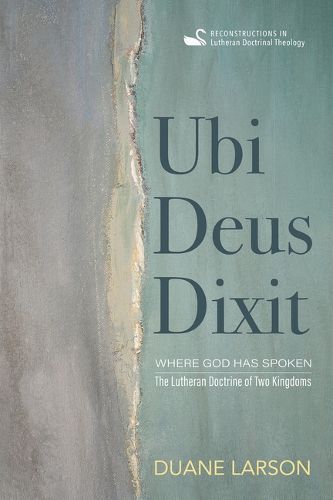
The Lutheran Doctrine of Two Kingdoms commends a promising political theology. The doctrine challenged the extremes of religion/government fusion and absolute separation then, as it can with the crises of both Christian nationalism and ideological secularism now. But major changes in philosophy's understanding of natural law and human sovereignty left the doctrine little in the temporal realm to which the values of the spiritual realm could relate, a relationship necessary for the doctrine's viability. This severance was punctuated by the Nazi fusion of church and state. Another, though unrecognized, crisis was that Christian theology itself lost its eschatological mind, which had framed the doctrine. Now philosophy and theology have rediscovered eschatology and apocalyptic. When so read, the Doctrine of Two Kingdoms holds great promise for faith and politics, freed from the flatly chronological eschatology that holds popular culture in thrall today. In this early volume of a new series of postmodern reclamations of doctrine in the Lutheran tradition, Duane Larson offers a theological vision for our politics informed by philosophy and law that enlarges our understanding of St. Paul's counsel to "obey the governing authorities."
$9.00 standard shipping within Australia
FREE standard shipping within Australia for orders over $100.00
Express & International shipping calculated at checkout
Stock availability can be subject to change without notice. We recommend calling the shop or contacting our online team to check availability of low stock items. Please see our Shopping Online page for more details.
This title is printed to order. This book may have been self-published. If so, we cannot guarantee the quality of the content. In the main most books will have gone through the editing process however some may not. We therefore suggest that you be aware of this before ordering this book. If in doubt check either the author or publisher’s details as we are unable to accept any returns unless they are faulty. Please contact us if you have any questions.
The Lutheran Doctrine of Two Kingdoms commends a promising political theology. The doctrine challenged the extremes of religion/government fusion and absolute separation then, as it can with the crises of both Christian nationalism and ideological secularism now. But major changes in philosophy's understanding of natural law and human sovereignty left the doctrine little in the temporal realm to which the values of the spiritual realm could relate, a relationship necessary for the doctrine's viability. This severance was punctuated by the Nazi fusion of church and state. Another, though unrecognized, crisis was that Christian theology itself lost its eschatological mind, which had framed the doctrine. Now philosophy and theology have rediscovered eschatology and apocalyptic. When so read, the Doctrine of Two Kingdoms holds great promise for faith and politics, freed from the flatly chronological eschatology that holds popular culture in thrall today. In this early volume of a new series of postmodern reclamations of doctrine in the Lutheran tradition, Duane Larson offers a theological vision for our politics informed by philosophy and law that enlarges our understanding of St. Paul's counsel to "obey the governing authorities."
Search our extensive online catalogue.
