Readings Newsletter
Become a Readings Member to make your shopping experience even easier.
Sign in or sign up for free!
You’re not far away from qualifying for FREE standard shipping within Australia
You’ve qualified for FREE standard shipping within Australia
The cart is loading…


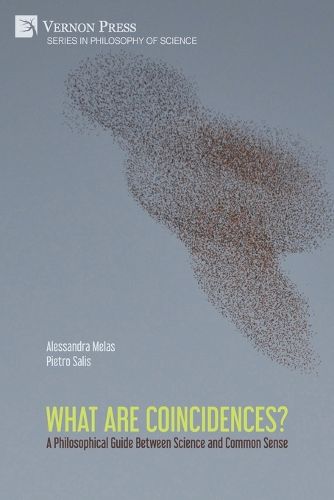
It is a common opinion that chance events cannot be understood in causal terms. Conversely, according to a causal view of chance, intersections between independent causal chains originate accidental events, called "coincidences". Firstly, this book explores this causal conception of chance and tries to shed new light on it. Such a view has been defended by authors like Antoine Augustine Cournot and Jacques Monod. Second, a relevant alternative is provided by those accounts that, instead of acknowledging an intersection among causal lines, claim to track coincidences back to some common cause. Third, starting from Herbert Hart and Anthony Honore's view of coincidences (Causation in the Law. Clarendon Press, Oxford, 1959). This book provides a more detailed account of coincidences, according to which coincidental events are hybrids constituted by ontic (physical) components, which is the intersection between independent causal chains, plus epistemic aspects, including but not limited to, access to information, expectations, relevance, significance, desires, which in turn are psychological aspects.
The main target of the present work is to show that the epistemic aspects of coincidences are, together with the independence between the intersecting causal chains, a constitutive part of coincidental phenomena. This book aims to introduce and discuss recent work in psychology concerning one's judgment about coincidences; this data offers further materials and reasons to reflect upon our understanding of coincidences and to refine our hybrid conception.
$9.00 standard shipping within Australia
FREE standard shipping within Australia for orders over $100.00
Express & International shipping calculated at checkout
Stock availability can be subject to change without notice. We recommend calling the shop or contacting our online team to check availability of low stock items. Please see our Shopping Online page for more details.
It is a common opinion that chance events cannot be understood in causal terms. Conversely, according to a causal view of chance, intersections between independent causal chains originate accidental events, called "coincidences". Firstly, this book explores this causal conception of chance and tries to shed new light on it. Such a view has been defended by authors like Antoine Augustine Cournot and Jacques Monod. Second, a relevant alternative is provided by those accounts that, instead of acknowledging an intersection among causal lines, claim to track coincidences back to some common cause. Third, starting from Herbert Hart and Anthony Honore's view of coincidences (Causation in the Law. Clarendon Press, Oxford, 1959). This book provides a more detailed account of coincidences, according to which coincidental events are hybrids constituted by ontic (physical) components, which is the intersection between independent causal chains, plus epistemic aspects, including but not limited to, access to information, expectations, relevance, significance, desires, which in turn are psychological aspects.
The main target of the present work is to show that the epistemic aspects of coincidences are, together with the independence between the intersecting causal chains, a constitutive part of coincidental phenomena. This book aims to introduce and discuss recent work in psychology concerning one's judgment about coincidences; this data offers further materials and reasons to reflect upon our understanding of coincidences and to refine our hybrid conception.
Search our extensive online catalogue.
