Readings Newsletter
Become a Readings Member to make your shopping experience even easier.
Sign in or sign up for free!
You’re not far away from qualifying for FREE standard shipping within Australia
You’ve qualified for FREE standard shipping within Australia
The cart is loading…


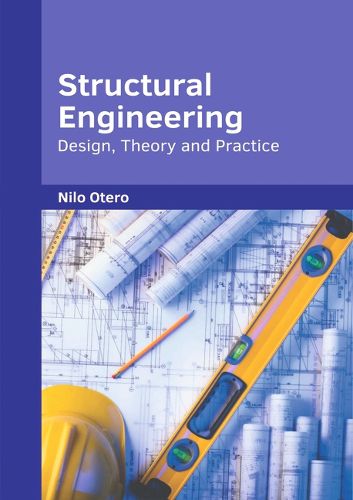
Structural engineering is a specialized branch of civil engineering focused on designing and analyzing structures that support or resist loads. This discipline ensures that buildings, bridges, towers, and other structures are safe, stable, and capable of withstanding the forces they encounter, such as gravity, wind, earthquakes, and human use. Structural engineering applies principles of physics, mathematics, and materials science to create designs that meet functional requirements while being economically feasible and aesthetically pleasing. It uses advanced software for modeling and simulation to predict how structures will behave under various conditions, ensuring their integrity and durability. Key focus areas of structural engineering include selecting appropriate construction materials, designing structural elements like beams, columns, and foundations, and performing load calculations. This book brings forth some of the most innovative concepts and elucidates the unexplored aspects of structural engineering. The ever-growing need of advanced technology is the reason that has fueled research in the field of structural engineering in recent times. This book aims to equip students and experts with the advanced topics and upcoming concepts in this area.
$9.00 standard shipping within Australia
FREE standard shipping within Australia for orders over $100.00
Express & International shipping calculated at checkout
Stock availability can be subject to change without notice. We recommend calling the shop or contacting our online team to check availability of low stock items. Please see our Shopping Online page for more details.
Structural engineering is a specialized branch of civil engineering focused on designing and analyzing structures that support or resist loads. This discipline ensures that buildings, bridges, towers, and other structures are safe, stable, and capable of withstanding the forces they encounter, such as gravity, wind, earthquakes, and human use. Structural engineering applies principles of physics, mathematics, and materials science to create designs that meet functional requirements while being economically feasible and aesthetically pleasing. It uses advanced software for modeling and simulation to predict how structures will behave under various conditions, ensuring their integrity and durability. Key focus areas of structural engineering include selecting appropriate construction materials, designing structural elements like beams, columns, and foundations, and performing load calculations. This book brings forth some of the most innovative concepts and elucidates the unexplored aspects of structural engineering. The ever-growing need of advanced technology is the reason that has fueled research in the field of structural engineering in recent times. This book aims to equip students and experts with the advanced topics and upcoming concepts in this area.
Search our extensive online catalogue.
