Readings Newsletter
Become a Readings Member to make your shopping experience even easier.
Sign in or sign up for free!
You’re not far away from qualifying for FREE standard shipping within Australia
You’ve qualified for FREE standard shipping within Australia
The cart is loading…


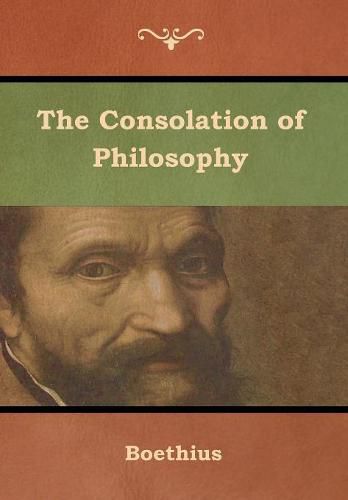
This title is printed to order. This book may have been self-published. If so, we cannot guarantee the quality of the content. In the main most books will have gone through the editing process however some may not. We therefore suggest that you be aware of this before ordering this book. If in doubt check either the author or publisher’s details as we are unable to accept any returns unless they are faulty. Please contact us if you have any questions.
Saint Anicius Manlius Severinus Boethius, commonly called Boethius (477-524 AD), was a Roman senator, consul, magister officiorum, and philosopher of the early 6th century. He was born about a year after Odoacer deposed the last Roman Emperor and declared himself King of Italy. Boethius entered public service under Ostrogothic King Theodoric the Great, who later imprisoned and executed him in 524 on charges of conspiracy to overthrow him. While jailed, Boethius composed his Consolation of Philosophy, a philosophical treatise on fortune, death, and other issues, which became one of the most popular and influential works of the Middle Ages. As the author of numerous handbooks and translator of Aristotle, he became the main intermediary between Classical antiquity and following centuries.
The Consolation of Philosophy was written in AD 523 during a one-year imprisonment Boethius served while awaiting trial - and eventual execution - for the alleged crime of treason under the Ostrogothic King Theodoric the Great. Boethius was at the very heights of power in Rome, holding the prestigious office of magister officiorum, and was brought down by treachery. This experience inspired the text, which reflects on how evil can exist in a world governed by God (the problem of theodicy), and how happiness is still attainable amidst fickle fortune, while also considering the nature of happiness and God. It has been described as by far the most interesting example of prison literature the world has ever seen.
A link to Christianity is often assumed, yet there is no reference made to Jesus Christ or Christianity or any other specific religion other than a few oblique references to Pauline scripture, such as the symmetry between the opening lines of Book 4 Chapter 3 and 1 Corinthians 9:24. God is however represented not only as an eternal and all-knowing being, but as the source of all Good.
Boethius writes the book as a conversation between himself and Lady Philosophy. Lady Philosophy consoles Boethius by discussing the transitory nature of fame and wealth ( no man can ever truly be secure until he has been forsaken by Fortune ), and the ultimate superiority of things of the mind, which she calls the one true good . She contends that happiness comes from within, and that virtue is all that one truly has, because it is not imperilled by the vicissitudes of fortune. (wikipedia.org)
$9.00 standard shipping within Australia
FREE standard shipping within Australia for orders over $100.00
Express & International shipping calculated at checkout
Stock availability can be subject to change without notice. We recommend calling the shop or contacting our online team to check availability of low stock items. Please see our Shopping Online page for more details.
This title is printed to order. This book may have been self-published. If so, we cannot guarantee the quality of the content. In the main most books will have gone through the editing process however some may not. We therefore suggest that you be aware of this before ordering this book. If in doubt check either the author or publisher’s details as we are unable to accept any returns unless they are faulty. Please contact us if you have any questions.
Saint Anicius Manlius Severinus Boethius, commonly called Boethius (477-524 AD), was a Roman senator, consul, magister officiorum, and philosopher of the early 6th century. He was born about a year after Odoacer deposed the last Roman Emperor and declared himself King of Italy. Boethius entered public service under Ostrogothic King Theodoric the Great, who later imprisoned and executed him in 524 on charges of conspiracy to overthrow him. While jailed, Boethius composed his Consolation of Philosophy, a philosophical treatise on fortune, death, and other issues, which became one of the most popular and influential works of the Middle Ages. As the author of numerous handbooks and translator of Aristotle, he became the main intermediary between Classical antiquity and following centuries.
The Consolation of Philosophy was written in AD 523 during a one-year imprisonment Boethius served while awaiting trial - and eventual execution - for the alleged crime of treason under the Ostrogothic King Theodoric the Great. Boethius was at the very heights of power in Rome, holding the prestigious office of magister officiorum, and was brought down by treachery. This experience inspired the text, which reflects on how evil can exist in a world governed by God (the problem of theodicy), and how happiness is still attainable amidst fickle fortune, while also considering the nature of happiness and God. It has been described as by far the most interesting example of prison literature the world has ever seen.
A link to Christianity is often assumed, yet there is no reference made to Jesus Christ or Christianity or any other specific religion other than a few oblique references to Pauline scripture, such as the symmetry between the opening lines of Book 4 Chapter 3 and 1 Corinthians 9:24. God is however represented not only as an eternal and all-knowing being, but as the source of all Good.
Boethius writes the book as a conversation between himself and Lady Philosophy. Lady Philosophy consoles Boethius by discussing the transitory nature of fame and wealth ( no man can ever truly be secure until he has been forsaken by Fortune ), and the ultimate superiority of things of the mind, which she calls the one true good . She contends that happiness comes from within, and that virtue is all that one truly has, because it is not imperilled by the vicissitudes of fortune. (wikipedia.org)
Search our extensive online catalogue.
