Readings Newsletter
Become a Readings Member to make your shopping experience even easier.
Sign in or sign up for free!
You’re not far away from qualifying for FREE standard shipping within Australia
You’ve qualified for FREE standard shipping within Australia
The cart is loading…


This title is printed to order. This book may have been self-published. If so, we cannot guarantee the quality of the content. In the main most books will have gone through the editing process however some may not. We therefore suggest that you be aware of this before ordering this book. If in doubt check either the author or publisher’s details as we are unable to accept any returns unless they are faulty. Please contact us if you have any questions.
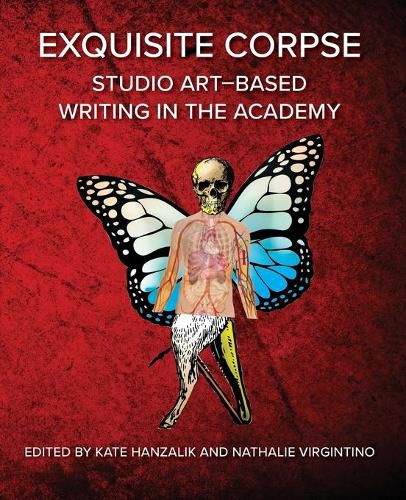
Out of the 1920s Surrealist art studios emerged the exquisite corpse, a collaboratively drawn body made whole through a series of disjointed parts whose relevance today is the subject of Exquisite Corpse: Studio Art-Based Writing in the Academy. This collection draws from the processes and pedagogies of artists and designers to reconcile disparate discourses in rhetoric and composition pertaining to 3Ms (multimodal, multimedia, multigenre), multiliteracies, translingualism, and electracy. With contributions from a diverse range of scholars, artists, and designers, the chapters in this collection expand the conversation to a broader notion of writing and composing in the 21st century that builds upon traditional notions of composing but also embraces newer and nontraditional forms. In the section devoted to process, readers will find connections between art, design, and academic writing that may encourage them to incorporate nontraditional strategies and styles into their own writing. In the section devoted to pedagogy, readers will encounter art-based writing projects and activities that highlight the importance of interdisciplinary work as students continue to compose in ways that are more than solely alphabetic. Both sections provide insight into experimental process, inquiry-based work, play, and risk-taking. They also reveal what failure and success mean today in the composition classroom. Throughout the collection, readers will encounter a variety of stylized critical essays, poetic vignettes, lavish contemporary visual art, 20th-century Surrealist exquisite corpse drawings, and candid snapshots from the artists’ own studios.
Contributors include John Dunnigan, Brian Gaines, Felix Burgos, Meghan Nolan, Derek Owens, Jason Palmeri, Christopher Rico, Jody Shipka, S. Andrew Stowe, Vittoria S. Rubino, Tara Roeder, Gregory L. Ulmer, and K. A. Wisniewski.
Inspired by the Surrealist parlor game that fosters play, randomness, and collaboration in the creative process, Exquisite Corpse: Studio Art-Based Writing in the Academy breathes fresh air into traditional pedagogy in the disciplines of writing, art- making, and writing about art. Its essays advocate playfulness, fancy, collaboration, collage, improvisation, and intersecting genres to upend traditional practices of academic art-making and criticism with the goals of richer creativity, inclusivity, and social justice. Reading it has made me want to try all sorts of new things in my writing classes. –James Lough, Savannah College of Art and Design.
As I made my way through this wonderfully diverse collection of essays exploring the elements and implications of art-based processes and art-based pedagogy, I (as reader, writer, and teacher) could feel my juices stir. Oh, the possibles. While this collection focuses on processes and pedagogy, the project as a whole subverts the traditional and skillfully sidesteps method to reveal ways of doing/teaching composition that inspire. This collection, as the editors suggest, values play, collaboration, community, imagination and artistic innovation, resonating the Deleuzian ‘difference.’ Each chapter reminds us that what it means to teach writing is to help students make the connection (between writing and life)–that writing like ‘difference’ comes first and above all, in the words of Deleuze, from the internal explosive force that life carries with it. Exquisite Corpse: Studio Art-Based Writing in the Academy is indeed exquisite. –Jacqueline Preston, Utah Valley University
$9.00 standard shipping within Australia
FREE standard shipping within Australia for orders over $100.00
Express & International shipping calculated at checkout
Stock availability can be subject to change without notice. We recommend calling the shop or contacting our online team to check availability of low stock items. Please see our Shopping Online page for more details.
This title is printed to order. This book may have been self-published. If so, we cannot guarantee the quality of the content. In the main most books will have gone through the editing process however some may not. We therefore suggest that you be aware of this before ordering this book. If in doubt check either the author or publisher’s details as we are unable to accept any returns unless they are faulty. Please contact us if you have any questions.
Out of the 1920s Surrealist art studios emerged the exquisite corpse, a collaboratively drawn body made whole through a series of disjointed parts whose relevance today is the subject of Exquisite Corpse: Studio Art-Based Writing in the Academy. This collection draws from the processes and pedagogies of artists and designers to reconcile disparate discourses in rhetoric and composition pertaining to 3Ms (multimodal, multimedia, multigenre), multiliteracies, translingualism, and electracy. With contributions from a diverse range of scholars, artists, and designers, the chapters in this collection expand the conversation to a broader notion of writing and composing in the 21st century that builds upon traditional notions of composing but also embraces newer and nontraditional forms. In the section devoted to process, readers will find connections between art, design, and academic writing that may encourage them to incorporate nontraditional strategies and styles into their own writing. In the section devoted to pedagogy, readers will encounter art-based writing projects and activities that highlight the importance of interdisciplinary work as students continue to compose in ways that are more than solely alphabetic. Both sections provide insight into experimental process, inquiry-based work, play, and risk-taking. They also reveal what failure and success mean today in the composition classroom. Throughout the collection, readers will encounter a variety of stylized critical essays, poetic vignettes, lavish contemporary visual art, 20th-century Surrealist exquisite corpse drawings, and candid snapshots from the artists’ own studios.
Contributors include John Dunnigan, Brian Gaines, Felix Burgos, Meghan Nolan, Derek Owens, Jason Palmeri, Christopher Rico, Jody Shipka, S. Andrew Stowe, Vittoria S. Rubino, Tara Roeder, Gregory L. Ulmer, and K. A. Wisniewski.
Inspired by the Surrealist parlor game that fosters play, randomness, and collaboration in the creative process, Exquisite Corpse: Studio Art-Based Writing in the Academy breathes fresh air into traditional pedagogy in the disciplines of writing, art- making, and writing about art. Its essays advocate playfulness, fancy, collaboration, collage, improvisation, and intersecting genres to upend traditional practices of academic art-making and criticism with the goals of richer creativity, inclusivity, and social justice. Reading it has made me want to try all sorts of new things in my writing classes. –James Lough, Savannah College of Art and Design.
As I made my way through this wonderfully diverse collection of essays exploring the elements and implications of art-based processes and art-based pedagogy, I (as reader, writer, and teacher) could feel my juices stir. Oh, the possibles. While this collection focuses on processes and pedagogy, the project as a whole subverts the traditional and skillfully sidesteps method to reveal ways of doing/teaching composition that inspire. This collection, as the editors suggest, values play, collaboration, community, imagination and artistic innovation, resonating the Deleuzian ‘difference.’ Each chapter reminds us that what it means to teach writing is to help students make the connection (between writing and life)–that writing like ‘difference’ comes first and above all, in the words of Deleuze, from the internal explosive force that life carries with it. Exquisite Corpse: Studio Art-Based Writing in the Academy is indeed exquisite. –Jacqueline Preston, Utah Valley University
Search our extensive online catalogue.
