Readings Newsletter
Become a Readings Member to make your shopping experience even easier.
Sign in or sign up for free!
You’re not far away from qualifying for FREE standard shipping within Australia
You’ve qualified for FREE standard shipping within Australia
The cart is loading…


This title is printed to order. This book may have been self-published. If so, we cannot guarantee the quality of the content. In the main most books will have gone through the editing process however some may not. We therefore suggest that you be aware of this before ordering this book. If in doubt check either the author or publisher’s details as we are unable to accept any returns unless they are faulty. Please contact us if you have any questions.
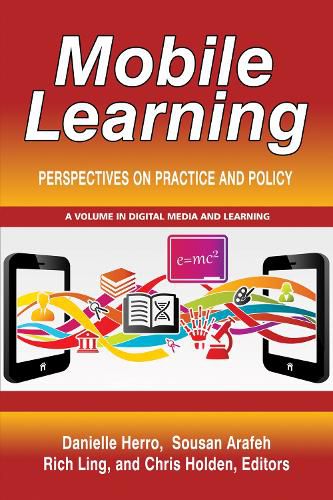
There can be no doubt that mobile technologies are here to stay. Global mobile traffic grew 74 percent in 2015 alone, with 563 million devices and connections added – most of them tablets and Smartphones. This growth has been 4000-fold in the past 10 years and 400 million-fold in the past 15 years (Cisco, 2016). Mobile technologies permeate the lives of 21st century citizens as mainstays of organizational and institutional day-to-day operations, commerce, and communication and as tools used to support individuals’ personal, social, and career responsibilities. In both the corporate and educational worlds, e- and m-learning and marketing with mobile technologies are moving forward at breakneck speed with, in many cases, a blurring of traditional sector boundaries.
As neither the technology nor the uses are static, exploring practices and policies that underpin this quickly shifting mobile technology context is crucial for ensuring its intelligent, purposeful, and equitable use. This edited book provides a venue for researchers to share their work on mobile learning with a focus on uses for mobiles in informal settings and PK-20 classrooms, language learning, mobile gaming, leadership and policy issues, and what mobile learning in the future may be. It assists researchers and educators to consider and answer questions such as: What is mobilelearning today? How can mobiles be used to enable learning? How is mobile learning crossing or connecting economic, social, and/or cultural sectors? How do specific cultural practices with media influence mobile learning (e.g., youth practices, educator practices, parent practices, community practices)? What are policy and leadership implications in supporting mobile learning? What policies, practices, and/or pedagogical approaches are necessary to move forward with mobiles in schools or universities? In what ways is mobile learning impacting education; including how students learn and teachers teach? What will/ should/might mobile learning look like in the future?
$9.00 standard shipping within Australia
FREE standard shipping within Australia for orders over $100.00
Express & International shipping calculated at checkout
Stock availability can be subject to change without notice. We recommend calling the shop or contacting our online team to check availability of low stock items. Please see our Shopping Online page for more details.
This title is printed to order. This book may have been self-published. If so, we cannot guarantee the quality of the content. In the main most books will have gone through the editing process however some may not. We therefore suggest that you be aware of this before ordering this book. If in doubt check either the author or publisher’s details as we are unable to accept any returns unless they are faulty. Please contact us if you have any questions.
There can be no doubt that mobile technologies are here to stay. Global mobile traffic grew 74 percent in 2015 alone, with 563 million devices and connections added – most of them tablets and Smartphones. This growth has been 4000-fold in the past 10 years and 400 million-fold in the past 15 years (Cisco, 2016). Mobile technologies permeate the lives of 21st century citizens as mainstays of organizational and institutional day-to-day operations, commerce, and communication and as tools used to support individuals’ personal, social, and career responsibilities. In both the corporate and educational worlds, e- and m-learning and marketing with mobile technologies are moving forward at breakneck speed with, in many cases, a blurring of traditional sector boundaries.
As neither the technology nor the uses are static, exploring practices and policies that underpin this quickly shifting mobile technology context is crucial for ensuring its intelligent, purposeful, and equitable use. This edited book provides a venue for researchers to share their work on mobile learning with a focus on uses for mobiles in informal settings and PK-20 classrooms, language learning, mobile gaming, leadership and policy issues, and what mobile learning in the future may be. It assists researchers and educators to consider and answer questions such as: What is mobilelearning today? How can mobiles be used to enable learning? How is mobile learning crossing or connecting economic, social, and/or cultural sectors? How do specific cultural practices with media influence mobile learning (e.g., youth practices, educator practices, parent practices, community practices)? What are policy and leadership implications in supporting mobile learning? What policies, practices, and/or pedagogical approaches are necessary to move forward with mobiles in schools or universities? In what ways is mobile learning impacting education; including how students learn and teachers teach? What will/ should/might mobile learning look like in the future?
Search our extensive online catalogue.
