Readings Newsletter
Become a Readings Member to make your shopping experience even easier.
Sign in or sign up for free!
You’re not far away from qualifying for FREE standard shipping within Australia
You’ve qualified for FREE standard shipping within Australia
The cart is loading…


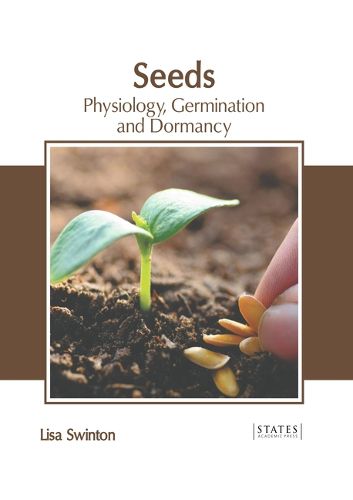
Seeds are the reproductive units of plants, containing an embryo, stored nutrients, and a protective outer coat. Seed physiology involves the processes that govern seed development, metabolism, and growth. Seeds contain an embryo, endosperm, and seed coat. The embryo is the young plant, the endosperm provides nutrients, and the seed coat protects the seed. During development, seeds accumulate reserves like starch, proteins, and oils, which are crucial for germination. The process of germination begins when a seed absorbs water, swelling and breaking the seed coat. Germination involves several stages: imbibition, enzyme activation, and growth of the radicle and plumule. Optimal conditions for germination include adequate moisture, oxygen, and suitable temperatures. Dormancy is a survival mechanism that prevents seeds from germinating under unfavorable conditions. It can be caused by factors like hard seed coats, chemical inhibitors, or immature embryos. Dormancy ensures seeds germinate only when conditions are ideal for seedling survival. Breaking dormancy may require specific treatments like scarification (scratching the seed coat), stratification, or exposure to light. This book is a compilation of chapters that discuss the most vital concepts and emerging trends in the field of seed physiology, germination and dormancy. The ever growing need of advanced technology is the reason that has fueled the research in this field in recent times. A number of latest researches have been included herein to keep the readers up-to-date with the global concepts in this area of study.
$9.00 standard shipping within Australia
FREE standard shipping within Australia for orders over $100.00
Express & International shipping calculated at checkout
Stock availability can be subject to change without notice. We recommend calling the shop or contacting our online team to check availability of low stock items. Please see our Shopping Online page for more details.
Seeds are the reproductive units of plants, containing an embryo, stored nutrients, and a protective outer coat. Seed physiology involves the processes that govern seed development, metabolism, and growth. Seeds contain an embryo, endosperm, and seed coat. The embryo is the young plant, the endosperm provides nutrients, and the seed coat protects the seed. During development, seeds accumulate reserves like starch, proteins, and oils, which are crucial for germination. The process of germination begins when a seed absorbs water, swelling and breaking the seed coat. Germination involves several stages: imbibition, enzyme activation, and growth of the radicle and plumule. Optimal conditions for germination include adequate moisture, oxygen, and suitable temperatures. Dormancy is a survival mechanism that prevents seeds from germinating under unfavorable conditions. It can be caused by factors like hard seed coats, chemical inhibitors, or immature embryos. Dormancy ensures seeds germinate only when conditions are ideal for seedling survival. Breaking dormancy may require specific treatments like scarification (scratching the seed coat), stratification, or exposure to light. This book is a compilation of chapters that discuss the most vital concepts and emerging trends in the field of seed physiology, germination and dormancy. The ever growing need of advanced technology is the reason that has fueled the research in this field in recent times. A number of latest researches have been included herein to keep the readers up-to-date with the global concepts in this area of study.
Search our extensive online catalogue.
