Readings Newsletter
Become a Readings Member to make your shopping experience even easier.
Sign in or sign up for free!
You’re not far away from qualifying for FREE standard shipping within Australia
You’ve qualified for FREE standard shipping within Australia
The cart is loading…


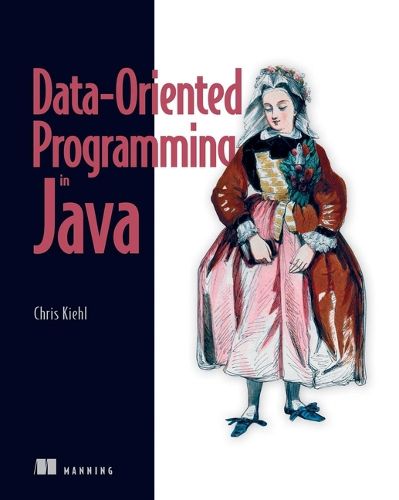
Get a free eBook (PDF or ePub) from Manning as well as access to the online liveBook format (and its AI assistant that will answer your questions in any language) when you purchase the print book. Data is the heart of your code. Data-oriented programming is a programming technique that enables you to precisely model domains and write large enterprise-scale applications that are oriented around the data they manage. Take a data-oriented approach to your Java applications, and you'll enjoy simpler state management, improved readability, and no more state-related bugs!
This book teaches you how to use immutable strongly typed data effectively and take full advantage of the modern data-oriented features built into the Java language. Simplify your Java code with data-oriented programming!
In Data-Oriented Programming in Java and you'll learn how to:
Data-Oriented Programming in Java shows you how to transform how you think about Java code by adopting a data-first mindset. Author Chris Kiehl has honed his data-oriented Java skills in the trenches of daily development at Amazon. This guide reveals those hard-earned techniques and approaches that will elevate your skills as a Java coder.
About the book
In Data-Oriented Programming in Java you'll learn what you might have thought was impossible: how to use Java's type system to make code self-documenting, implicit behaviors explicit, and incorrect states impossible to even compile. This practical book teaches you how to use records, sealed classes, and pattern matching to represent the data in your domain, explore data's inherent meaning and semantics, and represent them in their code. Each new concept is fully illustrated with a hands-on example that demonstrates how DOP helps you write scalable, testable, and maintainable code.
About the reader
For intermediate Java programmers.
About the author
Chris Kiehl is a senior software engineer at Amazon.
$9.00 standard shipping within Australia
FREE standard shipping within Australia for orders over $100.00
Express & International shipping calculated at checkout
Stock availability can be subject to change without notice. We recommend calling the shop or contacting our online team to check availability of low stock items. Please see our Shopping Online page for more details.
Get a free eBook (PDF or ePub) from Manning as well as access to the online liveBook format (and its AI assistant that will answer your questions in any language) when you purchase the print book. Data is the heart of your code. Data-oriented programming is a programming technique that enables you to precisely model domains and write large enterprise-scale applications that are oriented around the data they manage. Take a data-oriented approach to your Java applications, and you'll enjoy simpler state management, improved readability, and no more state-related bugs!
This book teaches you how to use immutable strongly typed data effectively and take full advantage of the modern data-oriented features built into the Java language. Simplify your Java code with data-oriented programming!
In Data-Oriented Programming in Java and you'll learn how to:
Data-Oriented Programming in Java shows you how to transform how you think about Java code by adopting a data-first mindset. Author Chris Kiehl has honed his data-oriented Java skills in the trenches of daily development at Amazon. This guide reveals those hard-earned techniques and approaches that will elevate your skills as a Java coder.
About the book
In Data-Oriented Programming in Java you'll learn what you might have thought was impossible: how to use Java's type system to make code self-documenting, implicit behaviors explicit, and incorrect states impossible to even compile. This practical book teaches you how to use records, sealed classes, and pattern matching to represent the data in your domain, explore data's inherent meaning and semantics, and represent them in their code. Each new concept is fully illustrated with a hands-on example that demonstrates how DOP helps you write scalable, testable, and maintainable code.
About the reader
For intermediate Java programmers.
About the author
Chris Kiehl is a senior software engineer at Amazon.
Search our extensive online catalogue.
