Readings Newsletter
Become a Readings Member to make your shopping experience even easier.
Sign in or sign up for free!
You’re not far away from qualifying for FREE standard shipping within Australia
You’ve qualified for FREE standard shipping within Australia
The cart is loading…


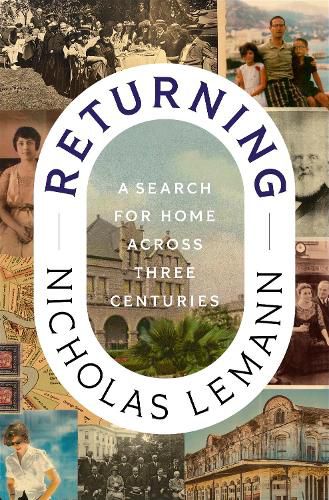
Nicholas Lemann, a veteran New Yorker correspondent, grew up in New Orleans, the son of German Jews in a world of gilded privilege. Yet in contrast to his parents' generation, which always sought to downplay their religious background, Lemann was intrigued by his roots, thinking he wanted to be like Jack Burden, the ever-curious reporter in Robert Penn Warren's All the King's Men.
And like his fictional hero, who gets drawn into a web of Southern political intrigue, Lemann in Returning delves deeply into the family story-from their arrival in the 1830s as peddlers from Germany, to their becoming plantation owners and department store owners after the Civil War, to their emergence as aspirants in the aristocratic world of New Orleans, where they could never quite belong.
Seemingly more Our Crowd than Yentl in its depiction of a German-Jewish family where young scions matriculated at Harvard and liveried staff served "crustless duck sandwiches" at cocktail parties, Returning, with its parade of colorful family characters-from his grandfather's cousin, who participated in a campaign to prevent a Jewish state in the 1940s, to his father, a wealthy business lawyer in a Deep South seigneurial city, who took his kids to temple only on Thanksgiving, to his New Jersey-raised mother, who "went into a kind of cardiac arrest of the soul" upon meeting the family-defies easy categorization. Indeed, as the Lemanns climbed the ranks of New Orleans's high society, their struggles became part of a larger metaphorical story of the challenges faced by Jews, even wealthy ones, who are never able to fit in.
Keenly aware of these contradictions, Lemann began chafing both at the South's strict racial hierarchy and at his relatives' eagerness to be accepted in a subtle but distinctly antisemitic environment. Returning then follows the narrator as he rejects this cossetted, assimilated society, embraces religion, and chooses, along with his wife, to raise his children in a Jewish world.
Searchingly asking what it is about antisemitism that allows it to flourish after two thousand years, Lemann uses his own family saga as a springboard to address some of the most urgent questions of our time. Through its nuanced combination of biography and philosophy wrapped into a family history, Returning ultimately becomes one of the most memorable statements about Jewish life in the twenty-first century.
$9.00 standard shipping within Australia
FREE standard shipping within Australia for orders over $100.00
Express & International shipping calculated at checkout
Stock availability can be subject to change without notice. We recommend calling the shop or contacting our online team to check availability of low stock items. Please see our Shopping Online page for more details.
Nicholas Lemann, a veteran New Yorker correspondent, grew up in New Orleans, the son of German Jews in a world of gilded privilege. Yet in contrast to his parents' generation, which always sought to downplay their religious background, Lemann was intrigued by his roots, thinking he wanted to be like Jack Burden, the ever-curious reporter in Robert Penn Warren's All the King's Men.
And like his fictional hero, who gets drawn into a web of Southern political intrigue, Lemann in Returning delves deeply into the family story-from their arrival in the 1830s as peddlers from Germany, to their becoming plantation owners and department store owners after the Civil War, to their emergence as aspirants in the aristocratic world of New Orleans, where they could never quite belong.
Seemingly more Our Crowd than Yentl in its depiction of a German-Jewish family where young scions matriculated at Harvard and liveried staff served "crustless duck sandwiches" at cocktail parties, Returning, with its parade of colorful family characters-from his grandfather's cousin, who participated in a campaign to prevent a Jewish state in the 1940s, to his father, a wealthy business lawyer in a Deep South seigneurial city, who took his kids to temple only on Thanksgiving, to his New Jersey-raised mother, who "went into a kind of cardiac arrest of the soul" upon meeting the family-defies easy categorization. Indeed, as the Lemanns climbed the ranks of New Orleans's high society, their struggles became part of a larger metaphorical story of the challenges faced by Jews, even wealthy ones, who are never able to fit in.
Keenly aware of these contradictions, Lemann began chafing both at the South's strict racial hierarchy and at his relatives' eagerness to be accepted in a subtle but distinctly antisemitic environment. Returning then follows the narrator as he rejects this cossetted, assimilated society, embraces religion, and chooses, along with his wife, to raise his children in a Jewish world.
Searchingly asking what it is about antisemitism that allows it to flourish after two thousand years, Lemann uses his own family saga as a springboard to address some of the most urgent questions of our time. Through its nuanced combination of biography and philosophy wrapped into a family history, Returning ultimately becomes one of the most memorable statements about Jewish life in the twenty-first century.
Search our extensive online catalogue.
