Readings Newsletter
Become a Readings Member to make your shopping experience even easier.
Sign in or sign up for free!
You’re not far away from qualifying for FREE standard shipping within Australia
You’ve qualified for FREE standard shipping within Australia
The cart is loading…


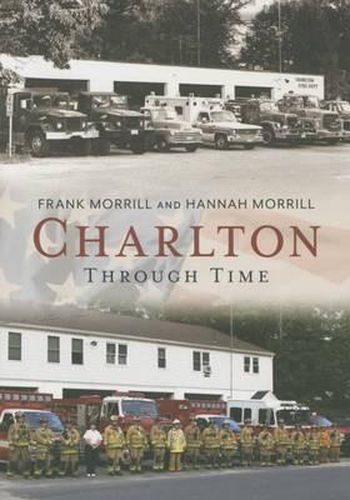
By the mid-nineteenth century 80 percent of Charlton land was used for agricultural purposes. The railroad arrived in 1838 giving the farmers new markets. The dairy industry, from which Charlton received it moniker cow town , expanded up to the First World War, then began a long decline, and has now vanished. As the twentieth century drew closer, small shops along the many waterways, began to be absorbed by larger mills which are now gone.Charlton’s excellent school system and its geographic location with its proximity to Worcester, Springfield, Hartford and Boston resulted in a dramatic population increase in the latter part of the 20th century.In 1920 the population was 1,995, by 1970 it had slowly increased to 4,654, then it was discovered and today it is over 13,000. Today, taking a leisurely walk through the woodlands of Charlton will result in viewing stonewalls in every direction, evidence of once open fields cleared of stones by hard working farmers of a bygone time.
$9.00 standard shipping within Australia
FREE standard shipping within Australia for orders over $100.00
Express & International shipping calculated at checkout
Stock availability can be subject to change without notice. We recommend calling the shop or contacting our online team to check availability of low stock items. Please see our Shopping Online page for more details.
By the mid-nineteenth century 80 percent of Charlton land was used for agricultural purposes. The railroad arrived in 1838 giving the farmers new markets. The dairy industry, from which Charlton received it moniker cow town , expanded up to the First World War, then began a long decline, and has now vanished. As the twentieth century drew closer, small shops along the many waterways, began to be absorbed by larger mills which are now gone.Charlton’s excellent school system and its geographic location with its proximity to Worcester, Springfield, Hartford and Boston resulted in a dramatic population increase in the latter part of the 20th century.In 1920 the population was 1,995, by 1970 it had slowly increased to 4,654, then it was discovered and today it is over 13,000. Today, taking a leisurely walk through the woodlands of Charlton will result in viewing stonewalls in every direction, evidence of once open fields cleared of stones by hard working farmers of a bygone time.
Search our extensive online catalogue.
