Readings Newsletter
Become a Readings Member to make your shopping experience even easier.
Sign in or sign up for free!
You’re not far away from qualifying for FREE standard shipping within Australia
You’ve qualified for FREE standard shipping within Australia
The cart is loading…


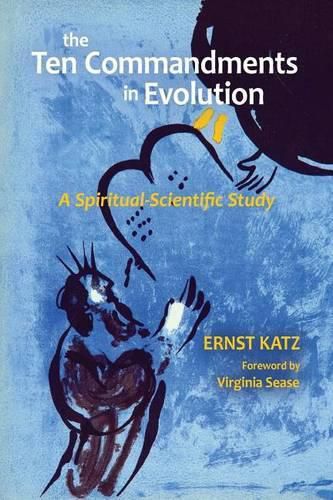
After some three millennia, why write anything further on the Ten Commandments? They have been discussed, parsed, codified, moralized, and much more. In this book, Ernst Katz discusses the Ten Commandments in terms of the evolution of human consciousness, suggesting that we need to view this ancient moral guide in whole new ways.
Using the Spiritual Science of Rudolf Steiner and his lifetime of study as a framework, Dr. Katz holds the Ten Commandments against the background of cosmic evolution, including the development of the tenfold human makeup, biblical prophecies, and the turning point in time of Christ’s incarnation on Earth and his fulfillment of the Law.
In the present time of the human consciousness soul, it is imperative that we renew our view of the Ten Commandments and the whole nature and meaning of morality. With the development of I -consciousness and autonomous human conscience, we must no longer simply follow an externally impressed law but express the spiritual inner law of conscience.
Ernst Katz writes: The aim of this study is to develop a better understanding of the spiritual origin of the Commandments; the reasons for their existence; their meaning and significance; and the various metamorphoses they have undergone since their inception. Such considerations can then, we hope, open a door to the true source of human morality in general. This is of the utmost importance in our time; for all moral values–and this includes the ‘moral freedom’ people frequently crave today–can be sustained only if such values are based on insight in the living process through which morality develops in human beings, both in the past and in our own time.
CONTENTS
Foreword by Virginia Sease, PhD Editor’s Preface Introduction
Notes Bibliography
$9.00 standard shipping within Australia
FREE standard shipping within Australia for orders over $100.00
Express & International shipping calculated at checkout
Stock availability can be subject to change without notice. We recommend calling the shop or contacting our online team to check availability of low stock items. Please see our Shopping Online page for more details.
After some three millennia, why write anything further on the Ten Commandments? They have been discussed, parsed, codified, moralized, and much more. In this book, Ernst Katz discusses the Ten Commandments in terms of the evolution of human consciousness, suggesting that we need to view this ancient moral guide in whole new ways.
Using the Spiritual Science of Rudolf Steiner and his lifetime of study as a framework, Dr. Katz holds the Ten Commandments against the background of cosmic evolution, including the development of the tenfold human makeup, biblical prophecies, and the turning point in time of Christ’s incarnation on Earth and his fulfillment of the Law.
In the present time of the human consciousness soul, it is imperative that we renew our view of the Ten Commandments and the whole nature and meaning of morality. With the development of I -consciousness and autonomous human conscience, we must no longer simply follow an externally impressed law but express the spiritual inner law of conscience.
Ernst Katz writes: The aim of this study is to develop a better understanding of the spiritual origin of the Commandments; the reasons for their existence; their meaning and significance; and the various metamorphoses they have undergone since their inception. Such considerations can then, we hope, open a door to the true source of human morality in general. This is of the utmost importance in our time; for all moral values–and this includes the ‘moral freedom’ people frequently crave today–can be sustained only if such values are based on insight in the living process through which morality develops in human beings, both in the past and in our own time.
CONTENTS
Foreword by Virginia Sease, PhD Editor’s Preface Introduction
Notes Bibliography
Search our extensive online catalogue.
