Readings Newsletter
Become a Readings Member to make your shopping experience even easier.
Sign in or sign up for free!
You’re not far away from qualifying for FREE standard shipping within Australia
You’ve qualified for FREE standard shipping within Australia
The cart is loading…


This title is printed to order. This book may have been self-published. If so, we cannot guarantee the quality of the content. In the main most books will have gone through the editing process however some may not. We therefore suggest that you be aware of this before ordering this book. If in doubt check either the author or publisher’s details as we are unable to accept any returns unless they are faulty. Please contact us if you have any questions.
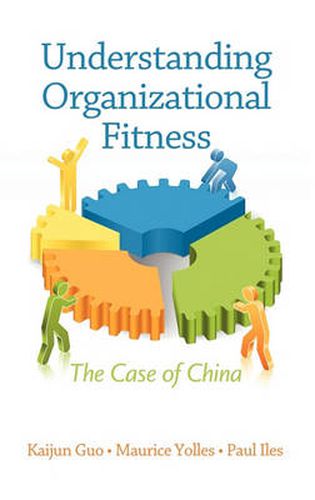
The focus if this book has two dimensions: theoretical and empirical. The theoretical dimension is concerned with the fitness of an organisation to satisfactorily address processes of transformational change. Such fitness, it will be argued, can be expressed in terms of the coherence (degree of integration) and pathology (condition of ill health) of the organisation being explored. In attempting to assess organisational fitness, a model that comes out of the field of knowledge cybernetics will be used and developed further as a strategic organisational map, and applied empirically. The empirical dimension centres on the specific situation of the banking industry in China as it is passing through transformational change. There is a great need for organisations there to guide their own changes in a way that enables them to improve themselves in a changing environment. A methodology that can assist organisations in the change process is organisation development, an approach often used within a human resource development context, but it has some problems with dealing with such dramatic change. In this theory a new approach will be explored and developed to assess the fitness of an organisation to pass through transformational change processes. The theory undertaken has enabled the theoretical approach adopted to be defined, and the design of the empirical work to emerge from reflections on the initial work undertaken. In particular our interests in this book are to (1) explain theory that is able to assess the fitness of organisations to pass through transformational change and (2) demonstrate how the theory can be applied as a measuring instrument to a detailed case study, exploring the Chinese State banking system.
$9.00 standard shipping within Australia
FREE standard shipping within Australia for orders over $100.00
Express & International shipping calculated at checkout
Stock availability can be subject to change without notice. We recommend calling the shop or contacting our online team to check availability of low stock items. Please see our Shopping Online page for more details.
This title is printed to order. This book may have been self-published. If so, we cannot guarantee the quality of the content. In the main most books will have gone through the editing process however some may not. We therefore suggest that you be aware of this before ordering this book. If in doubt check either the author or publisher’s details as we are unable to accept any returns unless they are faulty. Please contact us if you have any questions.
The focus if this book has two dimensions: theoretical and empirical. The theoretical dimension is concerned with the fitness of an organisation to satisfactorily address processes of transformational change. Such fitness, it will be argued, can be expressed in terms of the coherence (degree of integration) and pathology (condition of ill health) of the organisation being explored. In attempting to assess organisational fitness, a model that comes out of the field of knowledge cybernetics will be used and developed further as a strategic organisational map, and applied empirically. The empirical dimension centres on the specific situation of the banking industry in China as it is passing through transformational change. There is a great need for organisations there to guide their own changes in a way that enables them to improve themselves in a changing environment. A methodology that can assist organisations in the change process is organisation development, an approach often used within a human resource development context, but it has some problems with dealing with such dramatic change. In this theory a new approach will be explored and developed to assess the fitness of an organisation to pass through transformational change processes. The theory undertaken has enabled the theoretical approach adopted to be defined, and the design of the empirical work to emerge from reflections on the initial work undertaken. In particular our interests in this book are to (1) explain theory that is able to assess the fitness of organisations to pass through transformational change and (2) demonstrate how the theory can be applied as a measuring instrument to a detailed case study, exploring the Chinese State banking system.
Search our extensive online catalogue.
