Readings Newsletter
Become a Readings Member to make your shopping experience even easier.
Sign in or sign up for free!
You’re not far away from qualifying for FREE standard shipping within Australia
You’ve qualified for FREE standard shipping within Australia
The cart is loading…


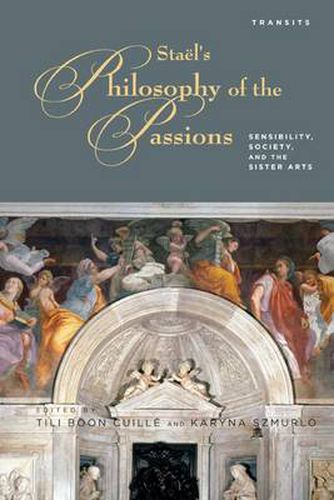
Sensibility, or the capacity to feel, played a vital role in philosophical reflection about the natural sciences, the social sciences, and the arts in eighteenth-century France. Yet scholars have privileged the Marquis de Sade’s vindication of physiological sensibility as the logical conclusion of Enlightenment over Germaine de Stael’s exploration of moral sensibility’s potential for reform and renewal that paved the way for Romanticism. This volume of essays showcases Stael’s contribution to the affective revolution in Europe, investigating the personal and political circumstances that informed her theory of the passions and the social and aesthetic innovations to which it gave rise. Contributors move seamlessly between her political, philosophical, and fictional works, attentive to the relationship between emotion and cognition and aware of the coherence of her thought on an individual, national, and international scale. They first examine the significance Stael attributed to pity, happiness, melancholy, and enthusiasm in The Influence of the Passions as she witnessed revolutionary strife and envisioned the new republic. They then explore her development of a cosmopolitan aesthetic, in such works as On Literature, Corinne, or Italy, On Germany, and The Spirit of Translation, that transcended traditional generic, national, and linguistic boundaries. Finally, they turn to her contributions to the visual and musical arts as she deftly negotiated the transition from a Neoclassical to a Romantic aesthetic. Stael’s Philosophy of the Passions concludes that, rather than founding a republic based on the rights of man, Stael’s reflection fostered international communities of women (artists, models, and collectors; authors, performers, and spectators), enabling them to participate in the re-articulation of sociocultural values in the wake of the French Revolution.
Contributors: Tili Boon Cuille, Catherine Dubeau, Nanette Le Coat, Christine Dunn Henderson, Karen de Bruin, M. Ione Crummy, Jennifer Law-Sullivan, Lauren Fortner Ravalico, C. C. Wharram, Kari Lokke, Susan Tenenbaum, Mary D. Sheriff, Heather Belnap Jensen, Fabienne Moore, Julia Effertz
$9.00 standard shipping within Australia
FREE standard shipping within Australia for orders over $100.00
Express & International shipping calculated at checkout
Stock availability can be subject to change without notice. We recommend calling the shop or contacting our online team to check availability of low stock items. Please see our Shopping Online page for more details.
Sensibility, or the capacity to feel, played a vital role in philosophical reflection about the natural sciences, the social sciences, and the arts in eighteenth-century France. Yet scholars have privileged the Marquis de Sade’s vindication of physiological sensibility as the logical conclusion of Enlightenment over Germaine de Stael’s exploration of moral sensibility’s potential for reform and renewal that paved the way for Romanticism. This volume of essays showcases Stael’s contribution to the affective revolution in Europe, investigating the personal and political circumstances that informed her theory of the passions and the social and aesthetic innovations to which it gave rise. Contributors move seamlessly between her political, philosophical, and fictional works, attentive to the relationship between emotion and cognition and aware of the coherence of her thought on an individual, national, and international scale. They first examine the significance Stael attributed to pity, happiness, melancholy, and enthusiasm in The Influence of the Passions as she witnessed revolutionary strife and envisioned the new republic. They then explore her development of a cosmopolitan aesthetic, in such works as On Literature, Corinne, or Italy, On Germany, and The Spirit of Translation, that transcended traditional generic, national, and linguistic boundaries. Finally, they turn to her contributions to the visual and musical arts as she deftly negotiated the transition from a Neoclassical to a Romantic aesthetic. Stael’s Philosophy of the Passions concludes that, rather than founding a republic based on the rights of man, Stael’s reflection fostered international communities of women (artists, models, and collectors; authors, performers, and spectators), enabling them to participate in the re-articulation of sociocultural values in the wake of the French Revolution.
Contributors: Tili Boon Cuille, Catherine Dubeau, Nanette Le Coat, Christine Dunn Henderson, Karen de Bruin, M. Ione Crummy, Jennifer Law-Sullivan, Lauren Fortner Ravalico, C. C. Wharram, Kari Lokke, Susan Tenenbaum, Mary D. Sheriff, Heather Belnap Jensen, Fabienne Moore, Julia Effertz
Search our extensive online catalogue.
