Readings Newsletter
Become a Readings Member to make your shopping experience even easier.
Sign in or sign up for free!
You’re not far away from qualifying for FREE standard shipping within Australia
You’ve qualified for FREE standard shipping within Australia
The cart is loading…


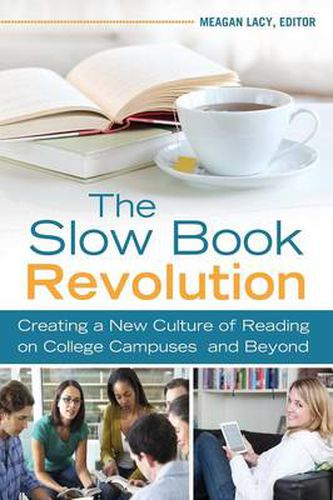
This inspiring guide shows how to implement the principles of the Slow Book movement in college campus libraries as well as public and high school libraries, with the ultimate goals of encouraging pensive reading habits and creating a lifelong enjoyment of books.
In a world of constant Facebook posts and Tweets, digital distractions and online reading habits are wearing at students’ ability to focus, reflect, synthesize, and think deeply. This professional text, based on a concept introduced by Maura Kelly in the online edition of The Atlantic, delves into the trend toward contemplative reading-otherwise known as the Slow Book movement-explaining what it is, why it’s important, and how you can implement it in various ways and in multiple settings.
Author and librarian Meagan Lacy, along with contributions from others in the field, offers insights, advice, and practical tools to help you foster an appreciation of reading in students both during and after college. The first part of the book establishes the importance of the Slow Book movement, while the second and third sections combine case studies and guidance for employing the principles of this method across multiple genres, including fiction, nonfiction, classics, and contemporary works. Chapters build a rationale for the approach, describe its underlying philosophy, and articulate concrete ways to apply the methodology in different venues.
Explains how you can address your users’ growing needs for sustained reflection and authentic connection
Shows how leading and promoting the Slow Book movement adds new value to your library
Presents examples and advice that you can use and adapt to lead the Slow Book movement at your library
Shows ways in which academic, public, and school librarians can form partnerships for literacy outreach programs
$9.00 standard shipping within Australia
FREE standard shipping within Australia for orders over $100.00
Express & International shipping calculated at checkout
Stock availability can be subject to change without notice. We recommend calling the shop or contacting our online team to check availability of low stock items. Please see our Shopping Online page for more details.
This inspiring guide shows how to implement the principles of the Slow Book movement in college campus libraries as well as public and high school libraries, with the ultimate goals of encouraging pensive reading habits and creating a lifelong enjoyment of books.
In a world of constant Facebook posts and Tweets, digital distractions and online reading habits are wearing at students’ ability to focus, reflect, synthesize, and think deeply. This professional text, based on a concept introduced by Maura Kelly in the online edition of The Atlantic, delves into the trend toward contemplative reading-otherwise known as the Slow Book movement-explaining what it is, why it’s important, and how you can implement it in various ways and in multiple settings.
Author and librarian Meagan Lacy, along with contributions from others in the field, offers insights, advice, and practical tools to help you foster an appreciation of reading in students both during and after college. The first part of the book establishes the importance of the Slow Book movement, while the second and third sections combine case studies and guidance for employing the principles of this method across multiple genres, including fiction, nonfiction, classics, and contemporary works. Chapters build a rationale for the approach, describe its underlying philosophy, and articulate concrete ways to apply the methodology in different venues.
Explains how you can address your users’ growing needs for sustained reflection and authentic connection
Shows how leading and promoting the Slow Book movement adds new value to your library
Presents examples and advice that you can use and adapt to lead the Slow Book movement at your library
Shows ways in which academic, public, and school librarians can form partnerships for literacy outreach programs
Search our extensive online catalogue.
