Readings Newsletter
Become a Readings Member to make your shopping experience even easier.
Sign in or sign up for free!
You’re not far away from qualifying for FREE standard shipping within Australia
You’ve qualified for FREE standard shipping within Australia
The cart is loading…


This title is printed to order. This book may have been self-published. If so, we cannot guarantee the quality of the content. In the main most books will have gone through the editing process however some may not. We therefore suggest that you be aware of this before ordering this book. If in doubt check either the author or publisher’s details as we are unable to accept any returns unless they are faulty. Please contact us if you have any questions.
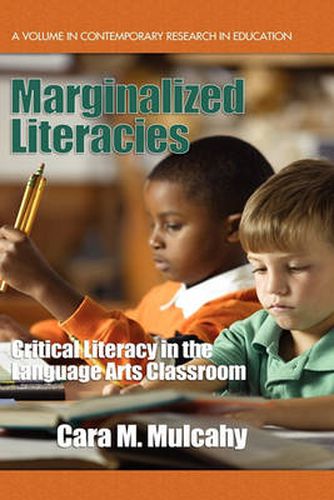
A volume in Contemporary Research in Education Series Editor Terry A. Osborn, Fordham University Functional literacy, cultural literacy, and progressive literacy are just a few of the many terms one can invoke when attempting to define literacy. From a critical perspective, for a democratic society to exist, a critical literacy is of crucial importance. Critical literacy aims to empower individuals and transform society. It is grounded in critical theory and, like critical pedagogy, investigates ways in which social, cultural, racial, sexual, and economic inequalities are reproduced. By investigating the ideological, political, and social structures that perpetuate such inequalities, it hopes to raise consciousness and move towards creating a more socially just society. This book examines the approaches set forth by Atwell, Calkins, and Rief in their books, In the Middle (1998); The Art of Teaching Writing (1994); and Seeking Diversity (1992), respectively. This book is of relevance to teacher educators and English Language Arts teachers. It enables one to become familiar with the main components of the Readers’/Writers’ workshop and develop an awareness of how literacy may be conceptualized and reconceptualized through this approach. Teacher educators will find this text useful for raising preservice teachers’ awareness of the ideologies that inform literacy education and in developing their understanding for how students are positioned socially, culturally, politically and economically by such ideologies. English Language Arts teachers will find this book informative in understanding how they can be positioned by teacher texts to teach towards certain ideologies of literacy. Finally, it allows teacher educators and English Language Arts teachers to consider what kind of literacy education is provided for through the Readers’/Writers’ workshop, and whether space may be negotiated within the Readers’/Writers’ workshop, for the teaching of critical literacy.
$9.00 standard shipping within Australia
FREE standard shipping within Australia for orders over $100.00
Express & International shipping calculated at checkout
Stock availability can be subject to change without notice. We recommend calling the shop or contacting our online team to check availability of low stock items. Please see our Shopping Online page for more details.
This title is printed to order. This book may have been self-published. If so, we cannot guarantee the quality of the content. In the main most books will have gone through the editing process however some may not. We therefore suggest that you be aware of this before ordering this book. If in doubt check either the author or publisher’s details as we are unable to accept any returns unless they are faulty. Please contact us if you have any questions.
A volume in Contemporary Research in Education Series Editor Terry A. Osborn, Fordham University Functional literacy, cultural literacy, and progressive literacy are just a few of the many terms one can invoke when attempting to define literacy. From a critical perspective, for a democratic society to exist, a critical literacy is of crucial importance. Critical literacy aims to empower individuals and transform society. It is grounded in critical theory and, like critical pedagogy, investigates ways in which social, cultural, racial, sexual, and economic inequalities are reproduced. By investigating the ideological, political, and social structures that perpetuate such inequalities, it hopes to raise consciousness and move towards creating a more socially just society. This book examines the approaches set forth by Atwell, Calkins, and Rief in their books, In the Middle (1998); The Art of Teaching Writing (1994); and Seeking Diversity (1992), respectively. This book is of relevance to teacher educators and English Language Arts teachers. It enables one to become familiar with the main components of the Readers’/Writers’ workshop and develop an awareness of how literacy may be conceptualized and reconceptualized through this approach. Teacher educators will find this text useful for raising preservice teachers’ awareness of the ideologies that inform literacy education and in developing their understanding for how students are positioned socially, culturally, politically and economically by such ideologies. English Language Arts teachers will find this book informative in understanding how they can be positioned by teacher texts to teach towards certain ideologies of literacy. Finally, it allows teacher educators and English Language Arts teachers to consider what kind of literacy education is provided for through the Readers’/Writers’ workshop, and whether space may be negotiated within the Readers’/Writers’ workshop, for the teaching of critical literacy.
Search our extensive online catalogue.
