Readings Newsletter
Become a Readings Member to make your shopping experience even easier.
Sign in or sign up for free!
You’re not far away from qualifying for FREE standard shipping within Australia
You’ve qualified for FREE standard shipping within Australia
The cart is loading…


This title is printed to order. This book may have been self-published. If so, we cannot guarantee the quality of the content. In the main most books will have gone through the editing process however some may not. We therefore suggest that you be aware of this before ordering this book. If in doubt check either the author or publisher’s details as we are unable to accept any returns unless they are faulty. Please contact us if you have any questions.
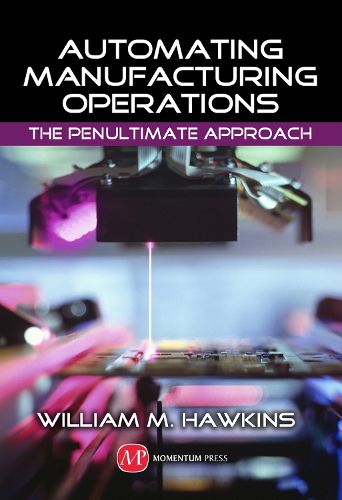
Industrial automation has gone from simple pre-programmed machine instructions to complex general manufacturing, rules-based automation procedures. Unlike other books on industrial automation, this book focuses in on ‘Manufacturing Operations Systems’ (MOPS) in general. It describes their development, implementation and successful management. The book especially addresses the all-important human-machine interface: computer-based manufacturing procedures that are understandable to both computers and humans. Consequently, a language for writing procedures is discussed. It is a language based on Chinese grammar, which is the simplest of all complex human languages. Finally, the design of procedures is discussed as a hierarchy of complexity, along with exception handling at each level. Readers with basic experience using non-procedural automation can greatly benefit from the productivity gains possible from procedural-based automation. They will learn how to create procedural language that is as close to natural language as possible.The reader also will benefit from:
A brief overview and history of Manufacturing Operations (MOPS) Coverage of manufacturing units and regulatory and sequential control
Discussion of Data recording from MOPs and tasks An overview of Automating Manufacturing Tasks with DCS, PLC, and PCS Guidelines for setting up an Automated MOPS (AMOPS) project Guidelines for validating an AMOPS for regulated industries Examples of applications for both continuous and batch manufacturing
$9.00 standard shipping within Australia
FREE standard shipping within Australia for orders over $100.00
Express & International shipping calculated at checkout
Stock availability can be subject to change without notice. We recommend calling the shop or contacting our online team to check availability of low stock items. Please see our Shopping Online page for more details.
This title is printed to order. This book may have been self-published. If so, we cannot guarantee the quality of the content. In the main most books will have gone through the editing process however some may not. We therefore suggest that you be aware of this before ordering this book. If in doubt check either the author or publisher’s details as we are unable to accept any returns unless they are faulty. Please contact us if you have any questions.
Industrial automation has gone from simple pre-programmed machine instructions to complex general manufacturing, rules-based automation procedures. Unlike other books on industrial automation, this book focuses in on ‘Manufacturing Operations Systems’ (MOPS) in general. It describes their development, implementation and successful management. The book especially addresses the all-important human-machine interface: computer-based manufacturing procedures that are understandable to both computers and humans. Consequently, a language for writing procedures is discussed. It is a language based on Chinese grammar, which is the simplest of all complex human languages. Finally, the design of procedures is discussed as a hierarchy of complexity, along with exception handling at each level. Readers with basic experience using non-procedural automation can greatly benefit from the productivity gains possible from procedural-based automation. They will learn how to create procedural language that is as close to natural language as possible.The reader also will benefit from:
A brief overview and history of Manufacturing Operations (MOPS) Coverage of manufacturing units and regulatory and sequential control
Discussion of Data recording from MOPs and tasks An overview of Automating Manufacturing Tasks with DCS, PLC, and PCS Guidelines for setting up an Automated MOPS (AMOPS) project Guidelines for validating an AMOPS for regulated industries Examples of applications for both continuous and batch manufacturing
Search our extensive online catalogue.
